Commando

Why Does My Black Tank Smell So Bad During the Summer?
Understanding and Preventing RV Black Tank Odor Issues in Hot Weather
If you’ve spent any time RVing in hot weather, you may have encountered a strong and persistent smell coming from your black tank. You're not alone. Summer RV odor issues are incredibly common due to the heat’s impact on waste breakdown and bacterial growth in RV holding tanks. As RV tank temperatures rise, so does the intensity of the odors. The confined space inside an RV only makes it more noticeable. Whether you're camping in the desert or parked at a sunny campsite, understanding the heat effects on RV tanks is essential for a more pleasant experience.
What Causes Black Tank Smells When It's Hot?
Black tank smells during summer are often due to the accelerated decomposition of waste at high temperatures. When heat builds up inside your RV’s waste system, it intensifies odor production and exacerbates RV waste system challenges. Odors are caused by anaerobic bacteria, which thrive in high temperatures. The warm environment acts like an incubator, speeding up bacterial activity and producing noxious gases like ammonia and hydrogen sulfide.
Managing RV Tank Smells: Products and Practices
The best strategy for managing RV tank smells in the heat involves regular maintenance and the right sanitation products. Porta-Pak is the industry's gold standard for combatting summer odors. Walex's team of R&D scientists originally created the Porta-Pak formula to control odors inside portable restrooms and later adapted it for the less-demanding RV environment. Still, it remains in a class of its own when it comes to odor control, with the ability to provide immediate and long-lasting freshness.
Water: A Key Ingredient in Preventing Black Tank Odors in Hot Weather
Preventing black tank odors begins with routine RV holding tank care. Always start with a clean tank—after dumping, add 1.25 gallons of water for every 10 gallons of tank capacity before dropping in a deodorizer. This helps submerge waste and prevent the “poo pyramid” from forming above the waterline. Adding inadequate water is one of the most common causes of black tank odors.
Hot Weather RV Maintenance Tips
In addition to using the best RV black tank treatments and adequate water, hot weather RV maintenance also includes keeping your RV cool and shaded when possible. Store your RV with windows cracked open for ventilation and park with your black tank side away from direct sun exposure. Use vent fans or an odor-neutralizing product inside the RV, like Walex’s Assure, to control smells at their source. Clean your tank regularly with Commando, an enzyme-based black tank cleaner that eliminates lingering odors and restores malfunctioning sensors. These are all essential summer RV sanitation tips to enhance your overall experience.
Stay Ahead of Summer RV Plumbing Problems
With proper knowledge and the right tools, preventing RV tank issues in the summer becomes manageable. From using black tank treatments that excel at odor control to understanding RV holding tank cleaning routines, these odor control in hot climates tips can save your trip. Always travel with proven solutions and make odor control in RVs part of your regular summer RV care checklist. Don’t let black tank smells ruin your adventure—equip yourself with effective, trusted products and enjoy the open road without the stink.

Complete Spring RV Cleaning Checklist: Inside and Out
Complete Spring RV Cleaning Checklist: Inside and Out
Quick Answer: To get your RV road-ready for summer, clean the exterior, roof, and awning; sanitize the interior; deep-clean the black and grey tanks; and eliminate lingering odors with targeted treatments.
1. Clean the RV Exterior
Winter storage can leave behind dirt, oxidation streaks, mildew, and road grime. A thorough exterior wash protects your RV’s finish and keeps it looking new.
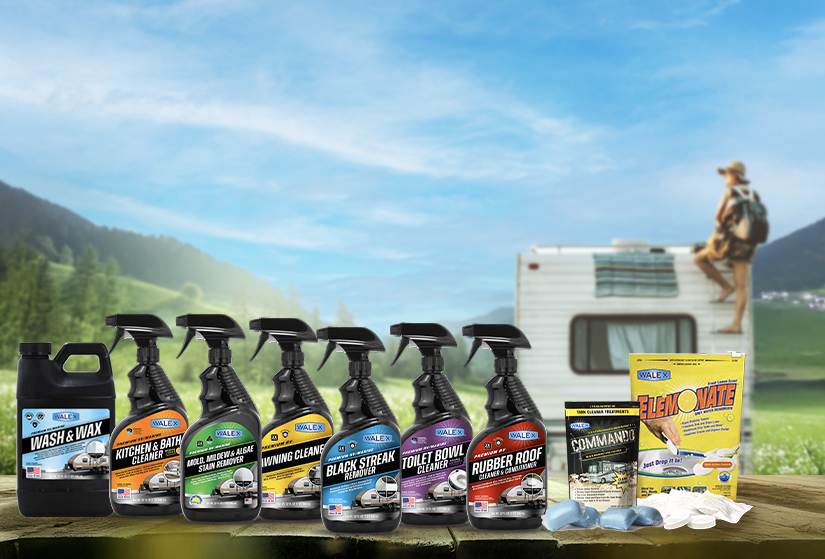
- Wash & Wax: A high-foam cleaner that removes dirt while leaving a protective barrier to repel water and grime.
- Black Streak Remover: Targets oxidation streaks along sidewalls.
- Mold & Mildew Remover: Eliminates algae and mildew stains on trim, vinyl, and plastic surfaces.
Pro Tip: Always clean from the roof down to avoid re-soiling freshly cleaned areas.
2. Refresh the RV Awning
Awnings collect bird droppings, dirt, and mildew during storage.
- Use a fabric-safe awning cleaner.
- Spray evenly, scrub gently with a soft brush, and rinse thoroughly.
Tip: Let the awning dry completely before retracting to prevent mold growth.
3. Clean and Protect the Roof
Your roof protects everything beneath it. Regular cleaning removes tree sap, road grime, and debris that can cause long-term damage.
- Use a rubber roof cleaner designed to remove buildup.
- Apply in sections and rinse thoroughly.
Look for formulas that include UV protection to extend roof life.
4. Sanitize the Interior
Kitchen and bathroom surfaces need RV-safe cleaning solutions that won’t harm plumbing, holding tanks or holding tank treatments.
- Use a non-abrasive kitchen & bath cleaner for countertops and sinks.
- Use a toilet bowl cleaner formulated specifically for RV systems.
Tip: Always choose products safe for seals and tank treatments.
5. Deep Clean the Black Holding Tank
A clean black tank prevents odors and restores accurate sensor readings.
- Empty and rinse the tank.
- Add a concentrated black tank cleaner such as Commando.
- Fill the tank with water and let sit 12–24 hours.
- Dump and rinse again.
Repeat every three months for preventative maintenance.
6. Eliminate Grey Tank Odors
Grey tanks collect soap, grease, and organic residue that can cause odors.
- Use an enzyme-based grey tank treatment such as Elemonate.
- Drop a tablet in the sink and run water briefly to dissolve.
Regular use keeps drains fresh and free-flowing.
7. Finish with Interior Odor Control
After deep cleaning, neutralize lingering odors from trash, pets, or storage.
- Use an odor eliminator spray that destroys odor molecules on contact.
- Apply near trash bins, storage compartments, and under tanks.
Keeping interior air fresh enhances every trip.
Final Thoughts
Spring is the perfect time to reset your RV for the season ahead. With a thorough cleaning and targeted tank maintenance, your rig will be spotless, odor-free, and ready for adventure.
Ready to roll? Stock up on RV cleaning essentials at your local RV dealer and start the season fresh!
How to De-Winterize Your RV Tanks for Spring
How to De-Winterize Your RV Tanks for Spring
Quick Answer: When de-winterizing your RV, deep-clean both the black and grey holding tanks using enzyme-based treatments. This removes residual buildup, eliminates odors, restores sensor accuracy, and prepares your system for summer travel.
Why Spring Tank Cleaning Is Important
After months in storage, waste residue, grease, and odor-causing buildup can remain inside your holding tanks. If not properly cleaned, this buildup can cause:
- Persistent odors
- False sensor readings
- Slow drainage
- Valve and seal issues
- Clogs from hardened waste
A spring deep clean ensures your RV is road-ready and odor-free.
How to Clean Your RV Black Tank After Winter Storage
For black tank cleaning, use a concentrated enzyme treatment such as Commando.
Why Enzyme Cleaning Works
Enzymes break down organic waste and toilet paper stuck to tank walls and sensors. This residual buildup is a common source of foul odors and inaccurate level readings.
How to Use a Black Tank Cleaner
- Empty and rinse the tank.
- Drop one pre-measured packet into the toilet.
- Fill the tank above sensor level.
- Let sit for 12–24 hours (longer for stubborn buildup).
- Dump and rinse.
In many cases, this restores sensor function without scrubbing or agitation. For preventative maintenance, repeat every three months.
How to Clean Your RV Grey Tank After Storage
Your grey tank collects water from sinks and showers, which leads to grease, soap residue, and organic sludge buildup over time.
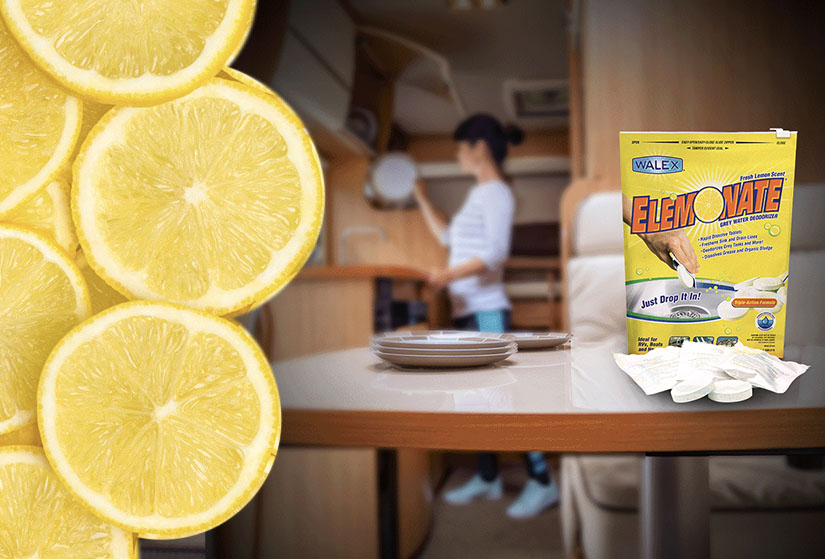
Elemonate is designed specifically for grey tank sanitation and drain line maintenance.
How to Use a Grey Tank Treatment
- Drop one tablet into a sink drain.
- Run water briefly to dissolve.
- Allow time for enzymes to break down grease and sludge.
- Empty the tank fully.
Regular use helps keep drain lines free-flowing and odor-free.
Spring RV Tank Maintenance Checklist
- Deep-clean black tank
- Restore sensor accuracy
- Clean grey tank and drain lines
- Lubricate valves and seals
- Eliminate residual odors before travel
Bottom Line
De-winterizing isn’t just about refilling water lines—it’s about starting the season with clean, properly functioning holding tanks. Using enzyme-based treatments simplifies the process and helps prevent odor and performance issues during peak travel months.
Happy Adventuring!
Why Does My RV Still Smell? Common Odor Sources and Solutions
Why Does My RV Still Smell? Common Odor Sources and Solutions
Quick Answer: If odors linger in your RV even after using a black tank deodorizer, the source may be your grey tank, interior air, or hardened black tank buildup. Targeted treatments for each odor source provide complete odor control.
Odor Source #1: Grey Holding Tank
Many RV owners focus only on the black tank, but the grey tank can also produce strong odors. Grey tanks collect water from sinks and showers, which contains:
- Grease and cooking residue
- Soap scum
- Food particles
- Organic sludge
Over time, this buildup can generate unpleasant smells.
Solution: Grey Tank Enzyme Treatment
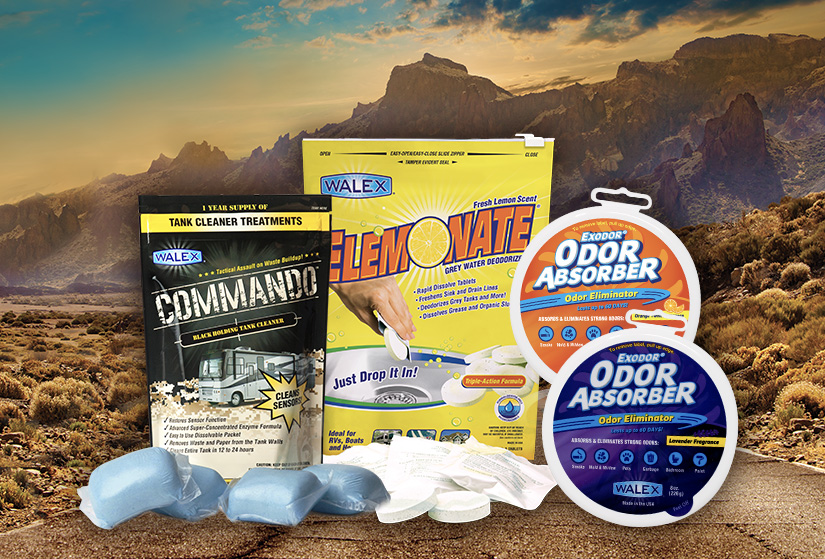
Elemonate is designed specifically for grey holding tanks. The quick-dissolving tablet contains enzymes that break down grease and sludge while releasing a fresh lemon scent.
To use:
- Drop one tablet into the sink drain.
- Run water for several seconds to dissolve.
- Allow enzymes to work inside the tank.
Odor Source #2: Interior Air (Mildew, Trash, Laundry)
RVs are compact spaces, which means odors from garbage, damp towels, or pets can quickly become noticeable.
Solution: Air Odor Neutralizer
Odor Absorber is a charcoal-infused gel that traps and neutralizes airborne odor molecules. Once opened, it works continuously for up to 60 days.
Common placement areas include:
- Under the sink
- Inside trash bins
- Near laundry storage
- In storage compartments
Odor Source #3: Black Tank Buildup (“Pyramid Plug”)
If black tank odors persist even when using deodorizer, hardened waste buildup may be the problem. This often happens when insufficient water is used, allowing solids to accumulate and cake onto tank walls and sensors.
This buildup can:
- Trap residual odor
- Cause false sensor readings
- Restrict proper tank flow
Solution: Deep Black Tank Cleaning
Commando is a concentrated enzyme cleaner designed to break down hardened solids and restore tank performance.
To use:
- Empty and rinse the tank.
- Add one packet and fill the tank with water.
- Let sit for 12–24 hours (longer if needed).
- Dump and rinse again.
The enzyme formula works without scrubbing to clean tank walls and sensors.
Complete RV Odor Control Strategy
- Treat black tank regularly
- Maintain grey tank with enzyme tablets
- Use adequate water after dumping
- Neutralize interior air odors
- Deep clean periodically
Bottom Line
If your RV still smells, the issue may not be your black tank deodorizer—it may be another overlooked odor source. Targeting each source individually ensures a fresher, more comfortable travel experience.
Need Help? Call 800-338-3155 or visit your local RV dealer for product guidance.
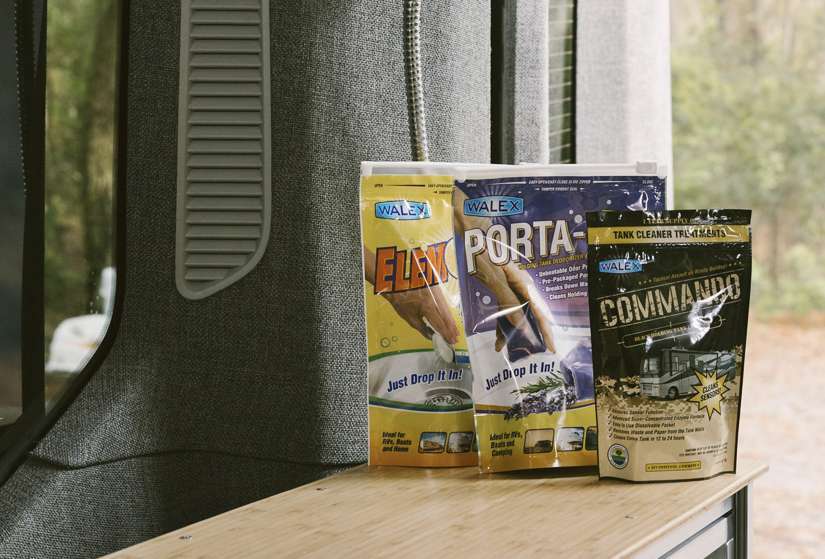
How do I get rid of the black tank pyramid?
A black tank pyramid refers to the buildup of waste and paper in your RV's black holding tank, and it can put a significant damper on your RV travels. Waste buildup fills your RV with foul odors and is a pain to remove—without the right products. Here's how you can prevent a pyramid from forming or eliminate one if it does.
Don't leave your black tank valve open when you're hooked up at a site.
If you allow your tank to drain gradually, the liquids will pass through while the solids build up in a solid pyramid. To thoroughly dump the contents of your tank, you need the assistance of gravity. Keep the valve closed until the tank is 2/3 full, and then dump it.
Use an enzyme-based deodorizer.
Enzymes digest waste and paper, so using a deodorizer with powerful enzymes will keep the contents of your black tank from solidifying. Walex's Bio-Pak is an enzyme-based formula contained in a rapid-dissolving water-soluble packet. When flushed down into the tank, the enzymes go to work immediately, breaking down buildup and deodorizing in the process.
Use an enzyme-based black tank cleaner.
If you suspect a waste pyramid has formed in your black holding tank, you need to use Commando. Commando's innovative formula is packed with enough enzymes to restore your black holding tank to good-as-new, no scrubbing or agitation required. Not only will it liquefy the waste and paper, but it will clean tank walls and sensors, restoring the accuracy of your sensors. Here's how to use it:
- Empty your tank, rinse out any chemical residue, close your dump valve, drop one Commando packet into the toilet, and flush
- Then fill your holding above your highest sensor or completely full.
- Leave it in for a minimum of 12 hours. Commando is formulated to work in as little as 12 to 24 hours for those in a hurry, but it will not hurt your tank to leave it in longer, several days, for more stubborn holding tank issues or clogs.
- Empty your tank. Rinse again. You can now add your deodorizer, refill with 1.25 gallons of water for every 10 gallons of holding tank capacity and continue using the toilet.
You can use Commando to destroy existing buildup or preventatively every three months to control buildup from forming.
Happy adventuring!


How Do Enzyme RV Tank Treatments Benefit Your Holding Tank?
How Do Enzyme RV Tank Treatments Benefit Your Holding Tank?
Quick Answer: Enzyme-based RV holding tank treatments speed up the breakdown of waste and toilet paper, helping prevent clogs, reduce odors, improve dumping efficiency, and keep tank sensors functioning properly.
What Are Enzymes and How Do They Work in RV Tanks?
Enzymes are naturally occurring proteins that act as catalysts, meaning they accelerate specific biological reactions. In an RV black or grey holding tank, enzymes help digest organic waste and toilet paper more quickly and efficiently.
Once added to the tank, enzyme formulas begin working immediately to liquefy solids and reduce the buildup that can accumulate on tank walls and sensors.
How Do Enzyme Treatments Prevent Clogs?
By breaking down waste and paper into smaller, more fluid particles, enzyme treatments help prevent:
- Pyramid buildup
- Paper accumulation
- Slow drainage
- Restricted flow during dumping
This improved digestion makes it easier to empty the tank completely when it reaches about two-thirds full.
Do Enzyme Tank Treatments Control Odors?
Yes. Odors often originate from undigested organic material inside the tank. Enzymes help neutralize odors by accelerating the decomposition of waste rather than simply masking smells.
Can You Use Regular Toilet Paper with Enzyme Treatments?
Many RV owners purchase specialty RV toilet paper to prevent clogs. However, a high-quality enzyme-based formula is typically powerful enough to digest standard household toilet tissue, eliminating the need for special paper.
Which Types of Enzyme Products Are Available?
There are several types of enzyme-based RV treatments, including:
- Black tank deodorizer and digester – For routine odor control and waste breakdown (e.g., Bio-Pak).
- Deep-clean black tank treatment – For removing hardened buildup and restoring sensors (e.g., Commando).
- Grey tank deodorizer – For breaking down grease and organic sludge in sink and shower tanks (e.g., Elemonate).
Why Product Quality Matters
Not all enzyme formulas are created equal. Higher-quality treatments are engineered for faster activation, stronger digestion, and consistent performance across varying climates and usage levels.
Bottom Line
Enzyme-based RV tank treatments improve digestion, reduce odors, prevent clogs, and help maintain accurate sensors—making them a smart choice for routine holding tank maintenance.
Happy Adventuring!
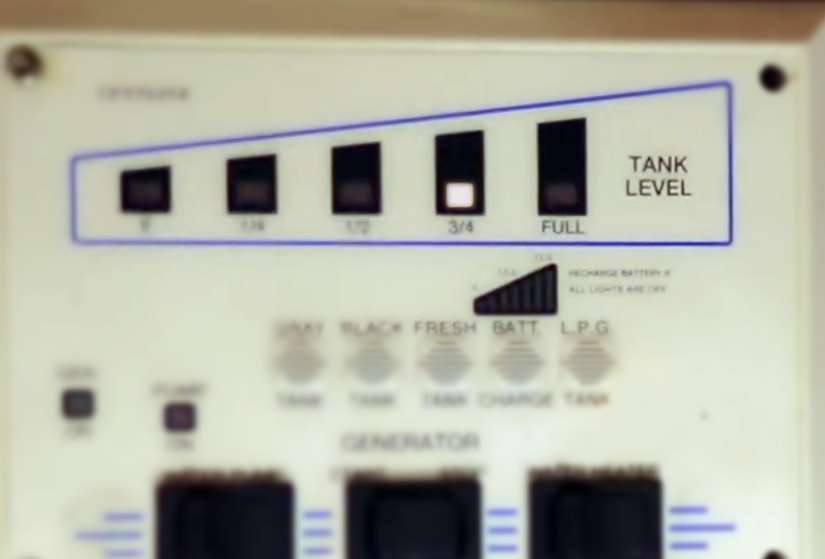
Black tank sensors reading 2/3 full? Here's the solution.
How to Fix RV Black Tank Sensors That Read Incorrectly
Problem: RV black tank sensors often show false readings—usually stuck at 2/3 full—even after dumping.
Quick Answer: Sensor misreadings are typically caused by waste and toilet paper residue stuck to tank walls. Cleaning the tank with an enzyme treatment like Commando can restore accurate readings in as little as 12–24 hours without scrubbing or agitation.
Why Are My RV Black Tank Sensors Showing the Wrong Level?
False readings happen when residue builds up on tank walls and sensor probes. This buildup tricks sensors into detecting liquid levels that aren’t actually there. Even after dumping, debris stuck to the sensors can make them appear partially full.
When sensors are inaccurate, RV owners often dump more frequently than necessary, which can lead to poor waste breakdown and the formation of hardened waste buildup commonly called a “pyramid plug.”
How Do You Clean RV Tank Sensors?
The easiest way to clean black tank sensors is by using a drop-in enzymatic cleaner designed to break down residue inside the tank.
Step-by-Step Sensor Cleaning Method
- Empty the holding tank completely and rinse to remove leftover chemicals.
- Close the dump valve, drop one Commando packet into the toilet, and flush.
- Fill the tank above the highest sensor (or completely full).
- Let it sit for at least 12 hours. For tougher buildup, leaving it longer can improve results.
- Dump and rinse again. Then add deodorizer and refill with about 1.25 gallons of water per 10 gallons of tank capacity.
How Does an Enzyme Tank Cleaner Work?
Enzyme-based treatments release natural digesting agents that break down waste, paper, and residue inside the tank. As buildup dissolves, sensors become exposed again and can read liquid levels accurately.
How Often Should You Clean RV Tank Sensors?
For preventative maintenance, clean your tank every three months. Regular treatment helps keep tank walls clear, lubricates valves and seals, and reduces the chance of clogs or inaccurate readings.
Many RV owners also include a deep tank cleaning as part of their winterizing routine to prevent buildup during storage.
When Should You Use a Tank Cleaning Treatment?
- Sensors always show partially full
- Readings fluctuate randomly
- Tank was stored without cleaning
- Dumping frequency has increased unexpectedly
- You suspect residue or buildup inside the tank
Pro Tip: If your sensors are inaccurate, cleaning the tank is almost always more effective than replacing the sensors themselves.
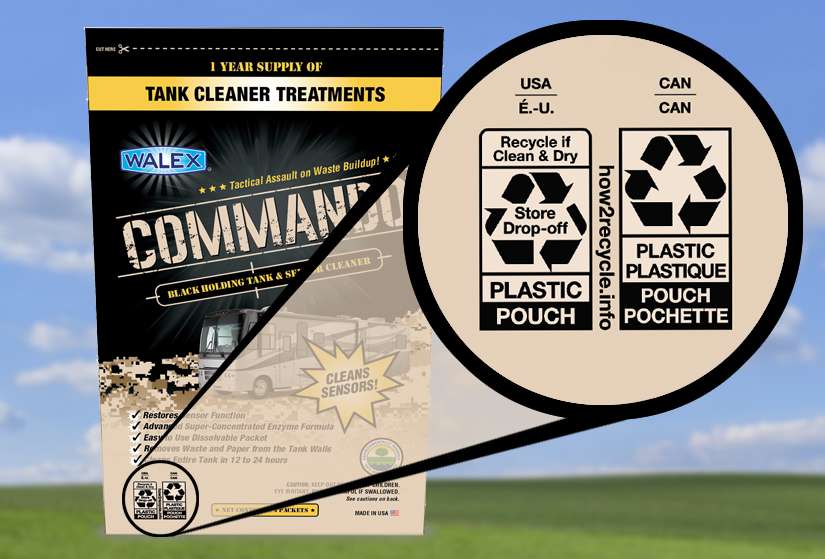
Commando now available in recyclable packaging
After debuting recyclable packaging for Bio-Active Septic Tank Treatment in 2021, Walex is now packaging its black holding tank cleaner, Commando, in the same eco-friendly material.
Walex plans to transition several more of its RV/Marine product line to recyclable material in the coming years. The effort is part of an eco-friendly initiative extending to the product formulas; all of Walex's RV/Marine products comply with the country's most stringent environmental standards.
Recycle your Commando bag in a plastic bag recycling bin located at many retail stores, including Lidl, Target, Walmart, and Wegmans. To recycle, ensure the package is clean and dry before placing it in the bin.
The new recyclable bags are stamped with a seal from How2Recycle, an organization that aims to clarify the recycling process by standardizing instructions and labels. According to How2Recycle.info, the bag material can be made into synthetic lumber for decking, park benches, or recycled directly into another bag.

Does Your RV Black Tank Need a Deep Clean?
Does Your RV Black Tank Need a Deep Clean?
Quick Answer: If you notice persistent odors, false sensor readings, or signs of hardened waste buildup (often called a “pyramid plug”), your black holding tank likely needs a deep enzymatic cleaning.
What Causes Black Tank Odors and Sensor Problems?
Even when using a regular deodorizer, waste and toilet paper can gradually accumulate on tank walls and sensor probes. Over time, this residue can:
- Create lingering odors
- Cause inaccurate tank level readings
- Lead to hardened “pyramid” buildup
- Interfere with valve performance
If your sensors always read partially full or your toilet doesn’t smell as fresh as it used to, buildup is often the cause.
What Is a “Pyramid Plug” in an RV Tank?
A pyramid plug forms when solid waste accumulates and hardens inside the tank, often due to insufficient water use or dumping too frequently. This buildup can restrict flow and contribute to persistent odor problems.
How to Deep Clean Your RV Black Tank
To remove residual waste and restore sensor accuracy, use a concentrated enzyme tank cleaner such as Commando.
Step-by-Step Deep Cleaning Method
- Empty and rinse the black tank thoroughly.
- Drop one pre-measured packet into the toilet.
- Fill the tank above sensor level with water.
- Allow the solution to sit for 12–24 hours (longer if buildup is stubborn).
- Dump and rinse again.
The enzyme formula works by breaking down waste and paper, loosening residue from tank walls, cleaning sensors, and helping lubricate valves and seals.
When Should You Deep Clean Your Black Tank?
- Before winterizing your RV
- After extended summer travel
- If sensors are giving false readings
- If odors persist after dumping
- As preventative maintenance every 3 months
Why Preventative Maintenance Matters
Routine deep cleaning helps prevent buildup before it becomes a major issue. Keeping tank walls clean improves odor control, ensures accurate sensor readings, and reduces the likelihood of clogs during peak travel season.
Bottom Line: If your RV black tank isn’t performing like it used to, a deep enzymatic cleaning can restore function and eliminate stubborn odors—no scrubbing required.
Happy Adventuring!

Can I leave Commando in my tank for longer than 24 hours?
How Long Should You Leave Tank Cleaner in an RV Black Tank?
Quick Answer: For best results, leave a black tank cleaning treatment like Commando in your holding tank for at least 12–24 hours. Leaving it longer—48 hours, 72 hours, or even up to a week—will not harm your tank and can improve cleaning for heavy buildup.
What Happens If You Don’t Leave Tank Cleaner in Long Enough?
Enzyme tank cleaners need time to break down waste, paper, and residue stuck to tank walls and sensors. If you dump too soon, the enzymes may not fully dissolve buildup, which can lead to persistent odors, clogs, or inaccurate sensor readings.
Can You Leave Tank Cleaner in Too Long?
No. Leaving an enzyme-based cleaner in your tank longer than the recommended minimum will not damage your holding tank. Extended soaking time often helps treatments penetrate stubborn buildup and improve overall cleaning results.
Why Does Soaking Time Matter?
Pre-measured treatments such as Commando contain concentrated enzymes that activate immediately after entering the tank. As they work, they digest waste and paper while loosening residue stuck to tank surfaces, valves, and sensors. Longer contact time allows the formula to clean more thoroughly.
When Should You Leave Cleaner in Longer Than 24 Hours?
- Tank has heavy buildup
- Sensors are giving false readings
- Tank hasn’t been cleaned in months
- Waste residue is hardened
- You’re preparing for seasonal storage
What If One Treatment Doesn’t Fully Clean the Tank?
If extreme buildup is present, simply repeat the cleaning process. Multiple treatments can gradually remove stubborn residue and restore tank performance without damaging system components.
Best Practices for Using RV Tank Cleaning Treatments
- Always start with an empty tank
- Fill above sensor level for full coverage
- Allow adequate soak time
- Rinse thoroughly after dumping
- Perform routine maintenance cleanings
Pro Tip: Deep-cleaning your tank periodically helps maintain accurate sensors, prevents odors, and keeps valves and seals operating smoothly.
Need Assistance? Call 800-338-3155 for expert product guidance and troubleshooting support.