Categories
February 24,2026
Complete Guide to RV Tank Sensors
Complete Guide to RV Tank Sensors
If your RV tank sensors always read 2/3 full, won’t reset after dumping, or give random readings, you’re not alone. Faulty tank sensors are one of the most common frustrations RVers experience.
The good news? Most sensor problems are not electrical failures. They’re buildup problems, and they’re preventable.
This guide explains:
- How RV tank sensors work
- Why they give false readings
- What “mounding” and residue buildup mean
- How to clean RV tank sensors properly
- How to prevent sensor fouling long-term
How RV Tank Sensors Work
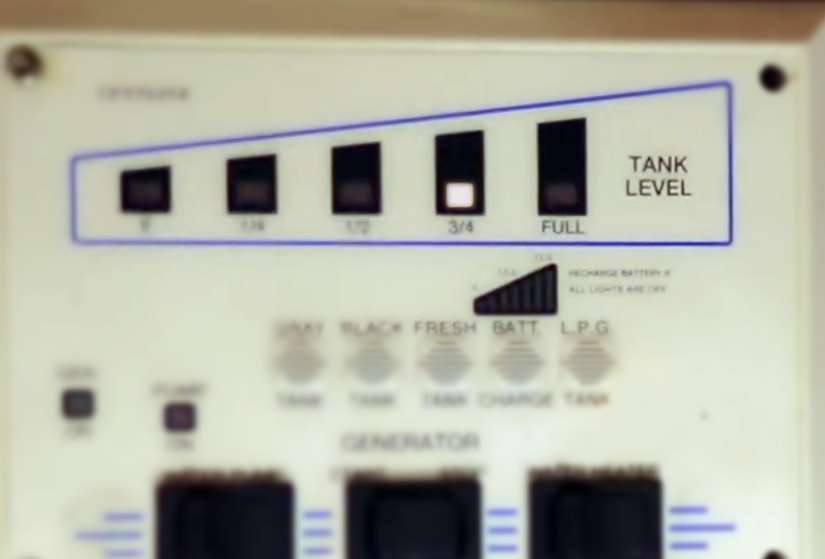
Most RV black tank sensors are simple conductivity probes mounted through the tank wall at different height levels — typically 1/3, 2/3, and full.
When liquid touches a probe, it completes a circuit and sends a signal to your monitor panel.
When waste or residue coats a probe, it can falsely complete that circuit — even when the tank is empty.
This is why most sensor issues are caused by buildup, not broken electronics.
Why RV Tank Sensors Give False Readings
1. Residue on Tank Walls
Waste, paper fibers, and organic material can cling to tank walls and sensor probes. When damp residue bridges between probes, the panel reads “full” even when empty.
2. Toilet Paper That Doesn’t Break Down
Some premium household tissues resist water breakdown. If paper doesn’t separate quickly, it can accumulate near sensors and cause chronic 2/3 readings.
3. Not Enough Water
Low water is the number one contributor to sensor fouling. Exposed waste sticks to tank surfaces instead of remaining suspended in water.
4. “Mounding” or Pyramid Formation
If solids collect directly under the toilet due to insufficient water, they form a mound. Over time, this buildup spreads outward and coats tank walls — including sensor probes.
5. Frequent Short Trips
If your tank is dumped before reaching at least 2/3 full, solids may not evacuate completely. Leftover material becomes the foundation for future buildup.
What Is “Mounding” and Residue Buildup?
Mounding occurs when waste drops into the tank without enough water to disperse it. Instead of mixing and breaking apart, it stacks.
Over time, this mound dries along tank walls and around sensors.
This buildup:
- Causes false readings
- Contributes to odor
- Reduces dumping efficiency
The solution is not stronger fragrance. It is proper water management and targeted paper breakdown.
How to Clean RV Tank Sensors (Step-by-Step Guide)
Quick answer: Fill the tank with water, add a cleaning treatment designed to target paper and residue, like Commando, allow contact time, then dump when mostly full.
Step 1: Start With an Empty Tank
Fully dump your black tank.
Step 2: Add Water
Fill the tank at least halfway with water. More water improves contact and cleaning action.
Step 3: Add a Paper-Digesting Treatment
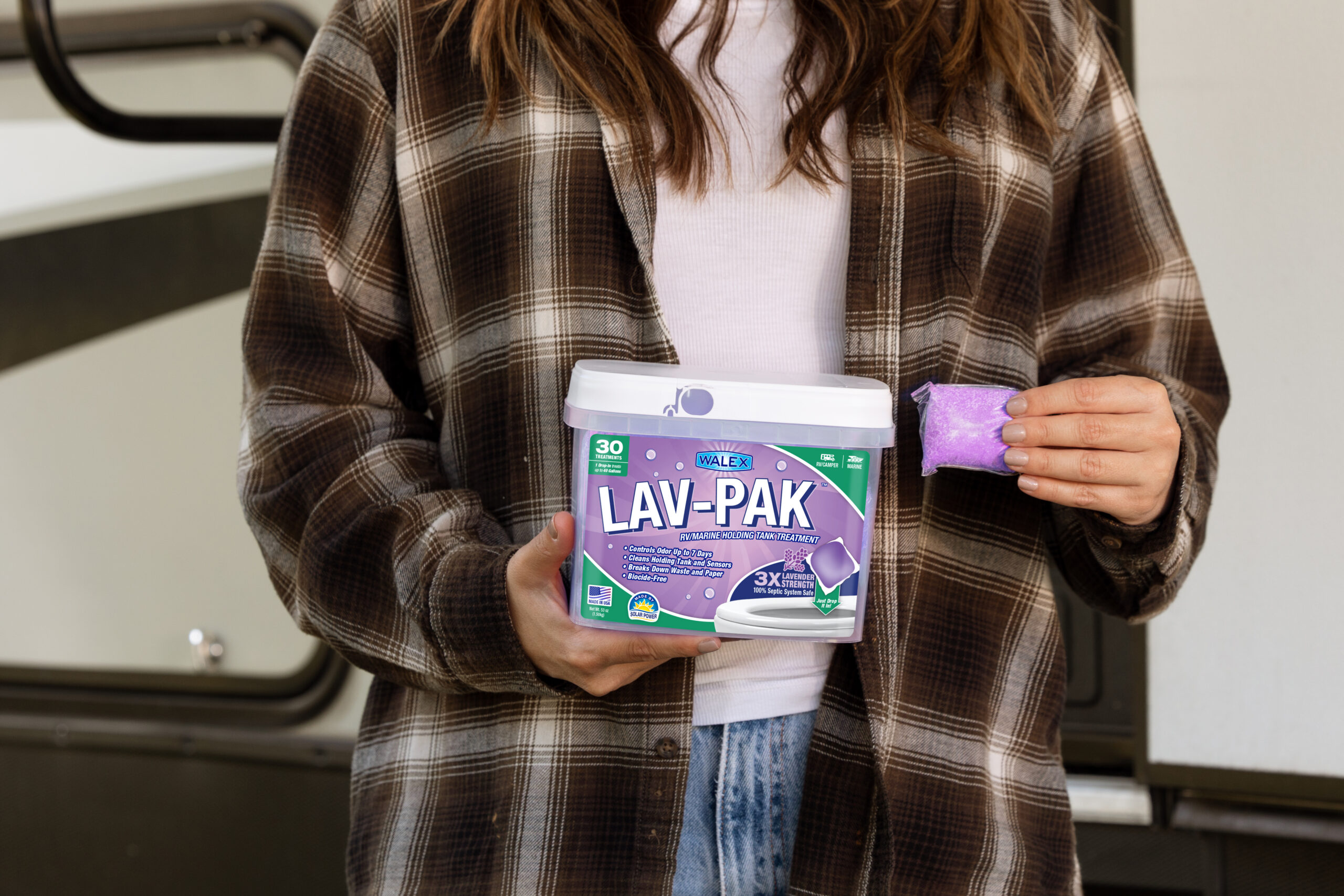
Use a treatment that contains enzymes specifically targeting cellulose (the primary component of toilet paper). Cellulase enzymes break down paper fibers that commonly coat sensors.
Step 4: Allow Time to Work
Let the solution sit. If possible, drive the RV so agitation helps loosen residue.
Step 5: Dump When Tank Is Mostly Full
Empty the tank when it is at least 2/3 full to maximize evacuation force.
In many cases, this process restores accurate readings.
Products That Help Prevent Sensor Issues
Treatments with Targeted Enzymes
Enzymes that digest paper directly target toilet paper buildup — one of the main contributors to sensor problems.
Because enzymes are highly specific, they act immediately on the molecules they are designed to break down.
Bacteria-Based Systems
Bacteria digest waste over time and can assist in liquefaction, but they require time to reproduce. In short-cycle RV use, enzyme assistance often improves performance speed.
Growth-Suppression Systems
Products that suppress bacterial activity focus primarily on odor control. They do not break down paper and are not designed for sensor cleaning.
Choosing the right system depends on whether your priority is odor control, paper breakdown, or both.
How Often Should You Clean RV Tank Sensors?
- Light weekend use: Every few months
- Full-time RVers: Monthly check and cleaning as needed
- After chronic false readings: Immediate cleaning cycle
Prevention is easier than restoration.
Long-Term Maintenance Schedule
- Add 3–5 gallons of water after every dump
- Treat immediately after dumping
- Use sufficient flush water during trips
- Dump when tank is mostly full
- Periodically perform a sensor cleaning cycle
Consistent water usage prevents most sensor issues.
Common Myths About RV Tank Sensors
My Sensors Are Broken
In most cases, sensors are functioning correctly but coated in residue.
Stronger Chemicals Fix Sensors Faster
Many harsh chemicals react indiscriminately and are quickly depleted in a waste-filled tank. Targeted paper breakdown and proper water management are more effective.
Bacteria Alone Will Fix Sensors
Bacteria digest waste, but sensor fouling often involves paper fibers that benefit from targeted enzyme action.
Frequently Asked Questions
Why does my RV tank always say 2/3 full?
Most commonly, residue or paper fibers are bridging the 2/3 sensor probe, completing the electrical circuit even when the tank is empty.
How do I reset my RV tank sensors?
There is usually no electronic reset. Cleaning the probes by removing buildup restores proper readings.
Can driving help clean sensors?
Yes. For stubborn issues, agitation from movement can help loosen residue during a cleaning cycle.
Does toilet paper type affect sensors?
Yes. Paper that resists breaking apart in water increases buildup risk. However, products like Commando and Bio-Fresh with targeted enzymes digest all paper types.
Is more treatment better?
Proper dosing is key. Water volume and correct dumping practices are equally important.
Final Thoughts
RV tank sensor problems are rarely electrical failures. They are almost always buildup problems caused by insufficient water, paper accumulation, and incomplete dumping.
When you manage water correctly, use targeted paper-digesting treatments, and follow a consistent maintenance routine, accurate sensor readings become the norm — not the exception.