Categories
February 24,2026
How RV Tank Treatments Actually Work
How RV Tank Treatments Actually Work
RV tank treatments can feel like a mystery: one product promises “digestion,” another claims “odor elimination,” and DIY methods like the Geo Method get recommended everywhere. So what’s actually happening inside your black tank, and which type of treatment works best for your situation?
Quick answer: RV tank treatments generally work in three ways: (1) enzymes that act on specific molecules, (2) bacteria that digest waste over time, and (3) chemical systems that neutralize odors or suppress odor generation. The right choice depends on your tank conditions, temperature, trip length, and what problem you’re trying to solve (odor, paper, buildup, or all of the above).
This guide breaks down the science in plain language so you can choose a treatment confidently.
What Happens Inside a Black Tank?
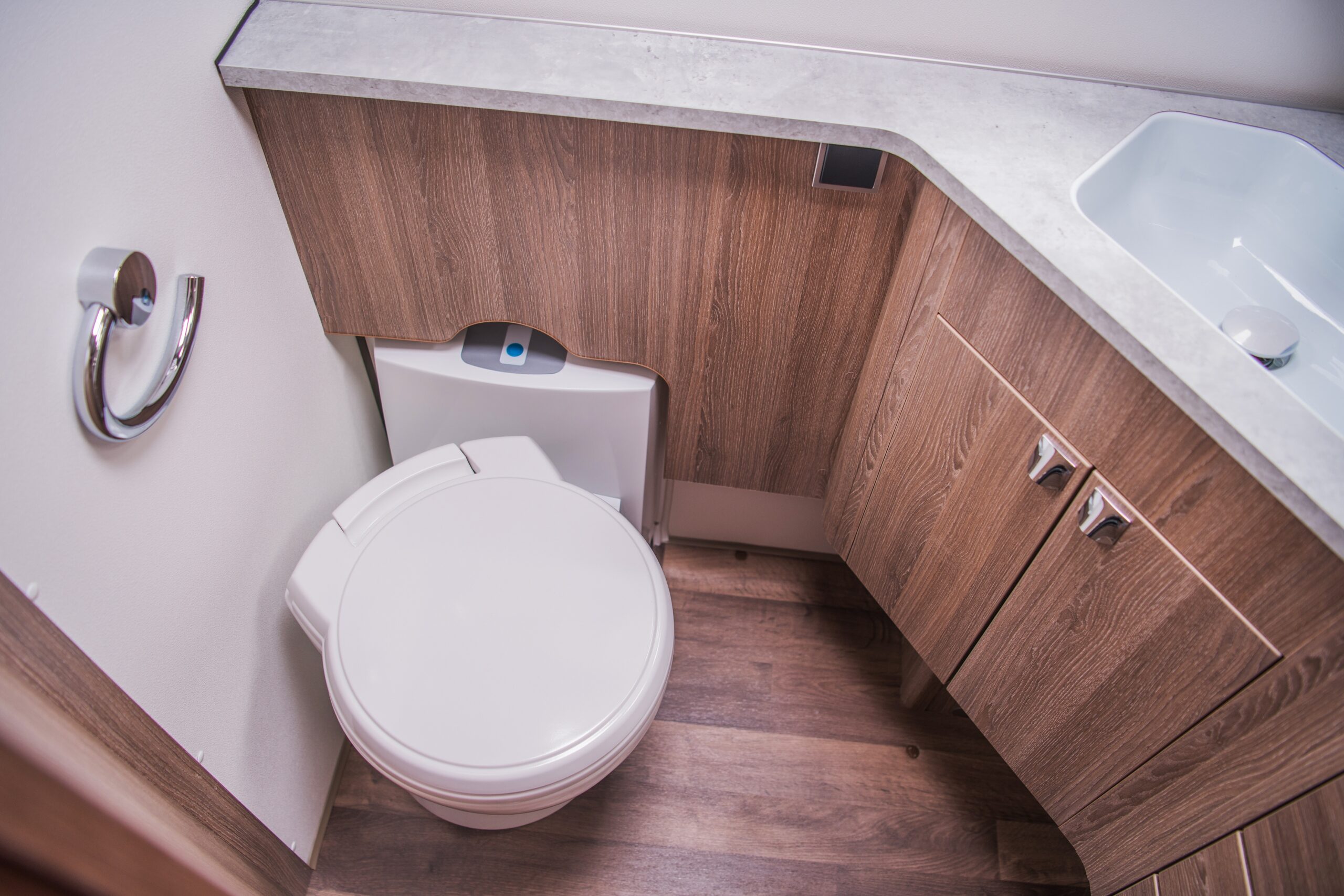
Your RV black tank is essentially a low-oxygen holding environment that collects:
- Water
- Human waste (including undigested fiber and bacteria from your digestive system)
- Toilet paper (cellulose fibers)
- Residual material that can cling to tank walls and sensors
Once waste sits in the tank, microbes begin breaking it down. In low-oxygen areas (which are common in a black tank), anaerobic bacteria can produce sulfur-containing gases — especially hydrogen sulfide — which is the “rotten egg” odor most RVers notice.
Temperature matters a lot. Warm conditions generally increase bacterial activity and odor potential. That’s why a tank that’s manageable in spring can become unbearable in peak summer heat if the treatment type isn’t suited for those conditions.
Enzymes Explained
Enzymes are specialized tools. Each enzyme is designed to act immediately on specific molecules.
In RV tank care, the most relevant enzyme category is one that targets the primary components of toilet paper. A targeted enzyme can help break down paper fibers that:
- Contribute to clogs and “pyramid plugs”
- Stick to tank walls and sensors
- Create buildup that traps odors
Enzymes can also be used for odor control when designed to oxidize or react with certain odor-causing molecules. The key advantage of enzymes is that they work immediately and don’t need time to “grow.”
Enzyme limitations: enzymes can have a capacity limit. If odor generation is extremely high (heavy use + high heat), an enzyme-based odor system may be overwhelmed unless paired with the right approach for those conditions.
Bacteria Explained
Bacteria are the long-game solution. They digest waste over time and can help liquefy solids as they grow. Bacteria perform thousands of biological reactions at once, but each individual task is slower compared to a targeted enzyme.
Why bacteria-based RV treatments can feel inconsistent:
- They need time to reproduce. If you dump every couple days, the bacteria may never reach a strong population.
- They don’t focus on odor. Odor compounds can be a small part of what bacteria do while they’re busy consuming many different nutrients.
- Oxygen matters. Adding oxygen-dependent bacteria to oxygen-starved zones doesn’t automatically “replace” anaerobic bacteria. Those environments are different.
When bacteria shine: longer stays, more stable tank conditions, and situations where ongoing digestion is the priority.
Chemical Deodorizers Explained
“Chemical” doesn’t automatically mean harsh, it simply means the treatment uses a non-biological mechanism to control odors.
Chemical approaches generally work in two ways:
1) Odor Neutralization (Reaction or Entrapment)
Some formulas contain ingredients that chemically react with odor molecules to render them less noticeable. Others “trap” or bind odor compounds so they don’t volatilize into the air.
2) Odor Prevention (Suppressing Odor Generation)
In hot weather or heavy use, the fastest way to stop odor is to stop odor generation. Some systems do this by suppressing bacterial growth. If bacteria aren’t actively digesting waste, they aren’t producing odor gases at the same rate.
Why this matters: in extremely hotconditions, odor can outpace “neutralization capacity.” Preventing generation can be the most reliable strategy when odor is the #1 concern.
Which Treatment Type Is Best?
The best RV tank treatment type depends on what problem you’re solving:
- Paper buildup / sensors / clogs: Look for targeted paper breakdown.
- Extreme odor in heat or heavy use: Consider approaches that stop odor generation quickly, like Porta-Pak.
- Ongoing digestion for longer stays: Bacteria systems can be effective when given time and stable conditions.
- A balanced approach: Some formulations, like Bio-Fresh and Bio-Pak, pair mechanisms to cover both immediate performance and longer-term digestion.
Best practice: no matter what you use, water management is critical. No treatment works well on exposed waste.
Myths About RV Tank Additives
Myth: “Enzymes don’t help odor.”
Some enzyme systems are designed specifically to oxidize or react with odor compounds. Enzymes are highly specific, so it depends on which enzymes are present and what they’re designed to do.
Myth: “If I add enough aerobic bacteria, they’ll replace anaerobic bacteria.”
Not necessarily. Aerobic and anaerobic bacteria thrive in different environments. Adding oxygen-breathing bacteria to oxygen-starved areas doesn’t automatically change those conditions.
Myth: “Methane is what smells.”
Methane is odorless. The “rotten egg” smell is typically linked to sulfur compounds like hydrogen sulfide.
Myth: “More product always works better.”
Correct dosing matters, but water level, temperature, and dumping habits often matter just as much as the treatment itself.
The Truth About the Geo Method
The Geo Method is often described as a mix of water softener, laundry detergent, lots of water, and sometimes bleach.
Here’s what that typically means in practical terms:
- Water softener: primarily salt-based, aimed at reducing mineral interactions and helping waste “slide.”
- Laundry detergent: detergent + fragrance; may help reduce sticking and add a strong scent.
- Plenty of water: the most effective part of the method, because submerged waste behaves better and evacuates more cleanly.
- Bleach (optional): reacts with everything, including waste, meaning it can be quickly depleted in a dirty tank.
Bottom line: the Geo Method’s biggest “secret” is water. Water prevents exposed waste, reduces sticking, and improves dumping efficiency. Detergents can help with slickness and scent, but they don’t selectively neutralize odor chemistry the way targeted systems can.
Environmental Considerations
Many RVers ask: Are RV chemicals safe? The most useful way to think about this is to evaluate:
- What is the mechanism? Neutralizing odors vs suppressing growth vs supporting digestion.
- Where does the waste go? Septic systems, dump stations, or treatment facilities all have different realities.
- How often do you dump? Short-cycle dumping can make some biological approaches less effective.
Biological options (enzymes and bacteria) are often positioned as “natural,” and they can be. But “natural” does not always equal “fast.” In contrast, chemical systems can provide immediate odor control, especially in extreme conditions. Choosing the right system is about performance needs, trip style, and comfort expectations.
Frequently Asked Questions
Enzyme vs bacteria RV treatment: which works better?
Short answer: enzymes work immediately on specific targets (like paper), while bacteria digest waste over time. If you dump frequently, enzymes can deliver more consistent short-term performance. If you camp longer and want ongoing digestion, bacteria can help, especially when conditions are stable.
How do RV tank treatments work?
They work by breaking down paper (enzymes), digesting waste (bacteria), neutralizing odor molecules (reactive systems), or suppressing odor generation (growth suppression). Some formulas combine approaches.
Are RV chemicals safe for my tank?
Most RV-specific treatments are designed for holding tanks when used as directed. The key is using products formulated for RV sanitation and avoiding random household chemicals that may be indiscriminate or quickly depleted in a waste-filled environment.
Do bacteria-based products reduce odor right away?
Not always. Bacteria often need time to reproduce, and odor reduction may not be their primary “job.” That’s why immediate odor control can vary depending on trip length, temperature, and waste load.
Does the Geo Method actually work?
It can help mainly because it emphasizes using lots of water and detergent slickness. But it doesn’t reliably address odor chemistry in the same targeted way as dedicated RV tank treatments.
Final Thoughts
RV tank treatments aren’t magic — they’re chemistry and biology. The fastest way to get results is matching the treatment type to your conditions:
- Heat and heavy use = higher odor generation
- Short trips = less time for bacteria to ramp up
- Paper buildup = sensor issues and clogs
When you choose a system that fits your trip style — and pair it with proper water usage — you get a cleaner tank, more accurate sensors, fewer clogs, and a noticeably better RV experience.