Elemonate
Complete Spring RV Cleaning Checklist: Inside and Out
Complete Spring RV Cleaning Checklist: Inside and Out
Quick Answer: To get your RV road-ready for summer, clean the exterior, roof, and awning; sanitize the interior; deep-clean the black and grey tanks; and eliminate lingering odors with targeted treatments.
1. Clean the RV Exterior
Winter storage can leave behind dirt, oxidation streaks, mildew, and road grime. A thorough exterior wash protects your RV’s finish and keeps it looking new.
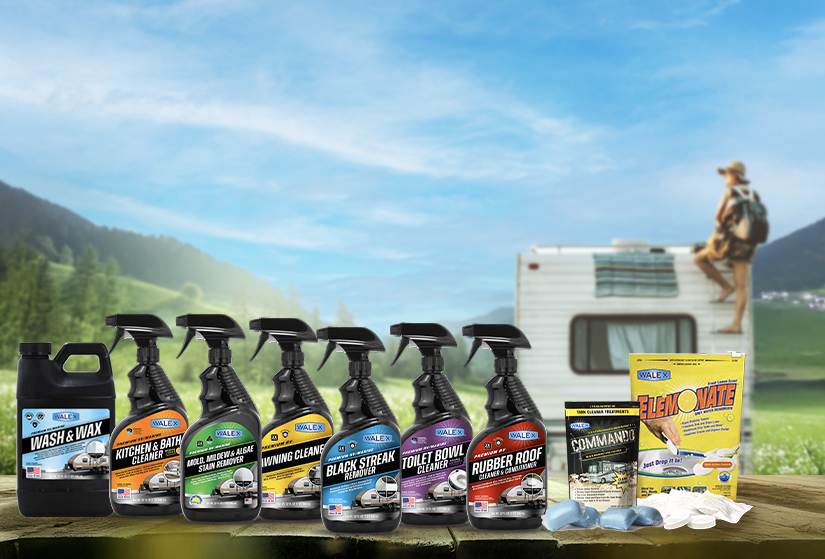
- Wash & Wax: A high-foam cleaner that removes dirt while leaving a protective barrier to repel water and grime.
- Black Streak Remover: Targets oxidation streaks along sidewalls.
- Mold & Mildew Remover: Eliminates algae and mildew stains on trim, vinyl, and plastic surfaces.
Pro Tip: Always clean from the roof down to avoid re-soiling freshly cleaned areas.
2. Refresh the RV Awning
Awnings collect bird droppings, dirt, and mildew during storage.
- Use a fabric-safe awning cleaner.
- Spray evenly, scrub gently with a soft brush, and rinse thoroughly.
Tip: Let the awning dry completely before retracting to prevent mold growth.
3. Clean and Protect the Roof
Your roof protects everything beneath it. Regular cleaning removes tree sap, road grime, and debris that can cause long-term damage.
- Use a rubber roof cleaner designed to remove buildup.
- Apply in sections and rinse thoroughly.
Look for formulas that include UV protection to extend roof life.
4. Sanitize the Interior
Kitchen and bathroom surfaces need RV-safe cleaning solutions that won’t harm plumbing, holding tanks or holding tank treatments.
- Use a non-abrasive kitchen & bath cleaner for countertops and sinks.
- Use a toilet bowl cleaner formulated specifically for RV systems.
Tip: Always choose products safe for seals and tank treatments.
5. Deep Clean the Black Holding Tank
A clean black tank prevents odors and restores accurate sensor readings.
- Empty and rinse the tank.
- Add a concentrated black tank cleaner such as Commando.
- Fill the tank with water and let sit 12–24 hours.
- Dump and rinse again.
Repeat every three months for preventative maintenance.
6. Eliminate Grey Tank Odors
Grey tanks collect soap, grease, and organic residue that can cause odors.
- Use an enzyme-based grey tank treatment such as Elemonate.
- Drop a tablet in the sink and run water briefly to dissolve.
Regular use keeps drains fresh and free-flowing.
7. Finish with Interior Odor Control
After deep cleaning, neutralize lingering odors from trash, pets, or storage.
- Use an odor eliminator spray that destroys odor molecules on contact.
- Apply near trash bins, storage compartments, and under tanks.
Keeping interior air fresh enhances every trip.
Final Thoughts
Spring is the perfect time to reset your RV for the season ahead. With a thorough cleaning and targeted tank maintenance, your rig will be spotless, odor-free, and ready for adventure.
Ready to roll? Stock up on RV cleaning essentials at your local RV dealer and start the season fresh!

How to Maintain Your RV Grey Holding Tank
How to Maintain Your RV Grey Holding Tank
Quick Answer: To maintain your RV grey tank, use a treatment designed for grease and soap buildup, avoid putting solids down the drain, dump regularly, rinse after emptying, and monitor tank levels.
Why Grey Tank Maintenance Matters
Your RV’s grey holding tank collects water from sinks and showers. While it may seem less problematic than the black tank, grey water contains grease, soap scum, food particles, and organic residue that can create odors and clogs over time.
Routine maintenance keeps your plumbing system flowing properly and prevents unpleasant smells inside your RV.
1. Use a Grey Tank-Specific Treatment
Not all tank treatments are formulated for grey water systems. Choose a product designed specifically to break down grease and organic sludge.
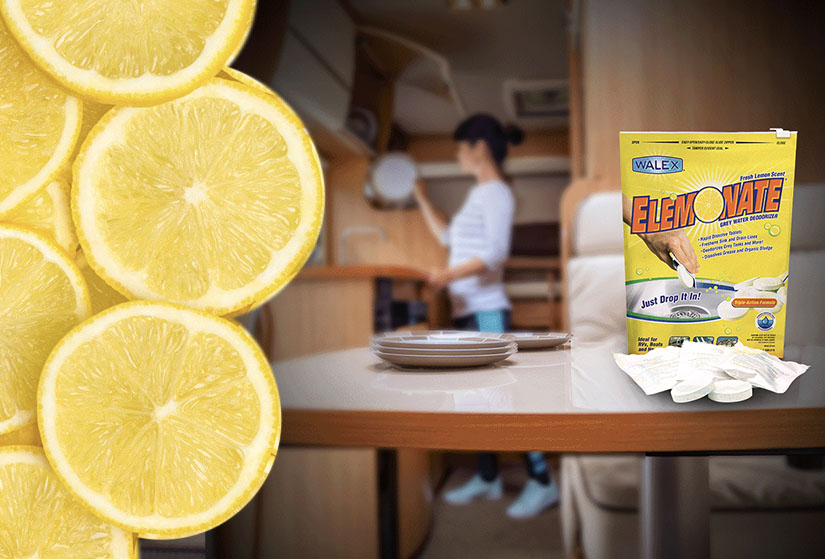
Elemonate is formulated to dissolve grease, food particles, and soap buildup while helping control odors. The quick-dissolving tablet releases enzymes and leaves behind a light lemon fragrance.
How to use:
- Drop one tablet into the sink drain.
- Run water for several seconds to dissolve it.
- Allow the enzymes to work inside the tank.
2. Avoid Putting Problem Items Down the Drain
While some residue is unavoidable, limiting certain materials helps prevent buildup.
Avoid sending the following into your grey tank:
- Cooking grease or oil
- Food scraps
- Coffee grounds
- Paper towels
These materials can accumulate quickly and restrict tank flow.
3. Dump the Grey Tank Regularly
Frequent dumping helps prevent bacterial growth and odor formation.
- Regular use: Dump every 3–4 days
- Light use: Dump as needed based on tank level
When servicing both tanks, always dump the black tank first, followed by the grey tank. The grey water helps rinse residual waste from the sewer hose.
4. Rinse After Dumping
After emptying the tank, rinse it thoroughly. You can:
- Refill partially with clean water and dump again
- Use a tank cleaning wand for deeper rinsing
This helps remove lingering residue from tank walls.
5. Monitor Tank Levels
Keep an eye on your tank monitor panel. Dumping before the tank reaches full capacity prevents backups and overflow issues.
Grey Tank Maintenance Checklist
- Use a grey tank-specific enzyme treatment
- Avoid grease and solids
- Dump regularly
- Rinse after emptying
- Monitor tank levels
Bottom Line
Consistent grey tank maintenance prevents odors, protects plumbing components, and keeps your RV experience clean and comfortable.
How to De-Winterize Your RV Tanks for Spring
How to De-Winterize Your RV Tanks for Spring
Quick Answer: When de-winterizing your RV, deep-clean both the black and grey holding tanks using enzyme-based treatments. This removes residual buildup, eliminates odors, restores sensor accuracy, and prepares your system for summer travel.
Why Spring Tank Cleaning Is Important
After months in storage, waste residue, grease, and odor-causing buildup can remain inside your holding tanks. If not properly cleaned, this buildup can cause:
- Persistent odors
- False sensor readings
- Slow drainage
- Valve and seal issues
- Clogs from hardened waste
A spring deep clean ensures your RV is road-ready and odor-free.
How to Clean Your RV Black Tank After Winter Storage
For black tank cleaning, use a concentrated enzyme treatment such as Commando.
Why Enzyme Cleaning Works
Enzymes break down organic waste and toilet paper stuck to tank walls and sensors. This residual buildup is a common source of foul odors and inaccurate level readings.
How to Use a Black Tank Cleaner
- Empty and rinse the tank.
- Drop one pre-measured packet into the toilet.
- Fill the tank above sensor level.
- Let sit for 12–24 hours (longer for stubborn buildup).
- Dump and rinse.
In many cases, this restores sensor function without scrubbing or agitation. For preventative maintenance, repeat every three months.
How to Clean Your RV Grey Tank After Storage
Your grey tank collects water from sinks and showers, which leads to grease, soap residue, and organic sludge buildup over time.
Elemonate is designed specifically for grey tank sanitation and drain line maintenance.
How to Use a Grey Tank Treatment
- Drop one tablet into a sink drain.
- Run water briefly to dissolve.
- Allow time for enzymes to break down grease and sludge.
- Empty the tank fully.
Regular use helps keep drain lines free-flowing and odor-free.
Spring RV Tank Maintenance Checklist
- Deep-clean black tank
- Restore sensor accuracy
- Clean grey tank and drain lines
- Lubricate valves and seals
- Eliminate residual odors before travel
Bottom Line
De-winterizing isn’t just about refilling water lines—it’s about starting the season with clean, properly functioning holding tanks. Using enzyme-based treatments simplifies the process and helps prevent odor and performance issues during peak travel months.
Happy Adventuring!
Why Does My RV Still Smell? Common Odor Sources and Solutions
Why Does My RV Still Smell? Common Odor Sources and Solutions
Quick Answer: If odors linger in your RV even after using a black tank deodorizer, the source may be your grey tank, interior air, or hardened black tank buildup. Targeted treatments for each odor source provide complete odor control.
Odor Source #1: Grey Holding Tank
Many RV owners focus only on the black tank, but the grey tank can also produce strong odors. Grey tanks collect water from sinks and showers, which contains:
- Grease and cooking residue
- Soap scum
- Food particles
- Organic sludge
Over time, this buildup can generate unpleasant smells.
Solution: Grey Tank Enzyme Treatment
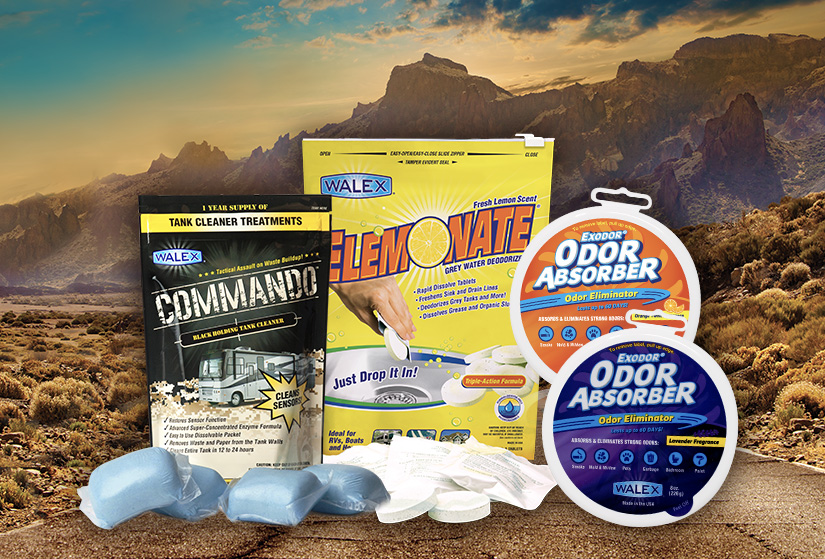
Elemonate is designed specifically for grey holding tanks. The quick-dissolving tablet contains enzymes that break down grease and sludge while releasing a fresh lemon scent.
To use:
- Drop one tablet into the sink drain.
- Run water for several seconds to dissolve.
- Allow enzymes to work inside the tank.
Odor Source #2: Interior Air (Mildew, Trash, Laundry)
RVs are compact spaces, which means odors from garbage, damp towels, or pets can quickly become noticeable.
Solution: Air Odor Neutralizer
Odor Absorber is a charcoal-infused gel that traps and neutralizes airborne odor molecules. Once opened, it works continuously for up to 60 days.
Common placement areas include:
- Under the sink
- Inside trash bins
- Near laundry storage
- In storage compartments
Odor Source #3: Black Tank Buildup (“Pyramid Plug”)
If black tank odors persist even when using deodorizer, hardened waste buildup may be the problem. This often happens when insufficient water is used, allowing solids to accumulate and cake onto tank walls and sensors.
This buildup can:
- Trap residual odor
- Cause false sensor readings
- Restrict proper tank flow
Solution: Deep Black Tank Cleaning
Commando is a concentrated enzyme cleaner designed to break down hardened solids and restore tank performance.
To use:
- Empty and rinse the tank.
- Add one packet and fill the tank with water.
- Let sit for 12–24 hours (longer if needed).
- Dump and rinse again.
The enzyme formula works without scrubbing to clean tank walls and sensors.
Complete RV Odor Control Strategy
- Treat black tank regularly
- Maintain grey tank with enzyme tablets
- Use adequate water after dumping
- Neutralize interior air odors
- Deep clean periodically
Bottom Line
If your RV still smells, the issue may not be your black tank deodorizer—it may be another overlooked odor source. Targeting each source individually ensures a fresher, more comfortable travel experience.
Need Help? Call 800-338-3155 or visit your local RV dealer for product guidance.

How Do Enzyme RV Tank Treatments Benefit Your Holding Tank?
How Do Enzyme RV Tank Treatments Benefit Your Holding Tank?
Quick Answer: Enzyme-based RV holding tank treatments speed up the breakdown of waste and toilet paper, helping prevent clogs, reduce odors, improve dumping efficiency, and keep tank sensors functioning properly.
What Are Enzymes and How Do They Work in RV Tanks?
Enzymes are naturally occurring proteins that act as catalysts, meaning they accelerate specific biological reactions. In an RV black or grey holding tank, enzymes help digest organic waste and toilet paper more quickly and efficiently.
Once added to the tank, enzyme formulas begin working immediately to liquefy solids and reduce the buildup that can accumulate on tank walls and sensors.
How Do Enzyme Treatments Prevent Clogs?
By breaking down waste and paper into smaller, more fluid particles, enzyme treatments help prevent:
- Pyramid buildup
- Paper accumulation
- Slow drainage
- Restricted flow during dumping
This improved digestion makes it easier to empty the tank completely when it reaches about two-thirds full.
Do Enzyme Tank Treatments Control Odors?
Yes. Odors often originate from undigested organic material inside the tank. Enzymes help neutralize odors by accelerating the decomposition of waste rather than simply masking smells.
Can You Use Regular Toilet Paper with Enzyme Treatments?
Many RV owners purchase specialty RV toilet paper to prevent clogs. However, a high-quality enzyme-based formula is typically powerful enough to digest standard household toilet tissue, eliminating the need for special paper.
Which Types of Enzyme Products Are Available?
There are several types of enzyme-based RV treatments, including:
- Black tank deodorizer and digester – For routine odor control and waste breakdown (e.g., Bio-Pak).
- Deep-clean black tank treatment – For removing hardened buildup and restoring sensors (e.g., Commando).
- Grey tank deodorizer – For breaking down grease and organic sludge in sink and shower tanks (e.g., Elemonate).
Why Product Quality Matters
Not all enzyme formulas are created equal. Higher-quality treatments are engineered for faster activation, stronger digestion, and consistent performance across varying climates and usage levels.
Bottom Line
Enzyme-based RV tank treatments improve digestion, reduce odors, prevent clogs, and help maintain accurate sensors—making them a smart choice for routine holding tank maintenance.
Happy Adventuring!


Can You Use RV Grey Tank Deodorizer in Your Home Drains?
Can You Use RV Grey Tank Deodorizer in Your Home Drains?
Quick Answer: Yes. An enzyme-based grey tank deodorizer designed for RV use can also help freshen home sinks, shower drains, and garbage disposals by breaking down grease and organic buildup.
What Is a Grey Tank Deodorizer?
A grey tank deodorizer is formulated for the RV tank that collects water from sinks and showers. These tanks accumulate soap residue, grease, food particles, and organic sludge—all of which can produce unpleasant odors over time.
Elemonate is a quick-dissolving tablet that releases digestive enzymes to break down odor-causing buildup while leaving behind a fresh lemon scent.
Can You Use Grey Tank Tablets in Household Drains?
Yes. The same types of organic residue that cause odors in RV grey tanks—grease, food scraps, and greywater buildup—can also accumulate in home plumbing systems.
Using an enzyme-based deodorizing tablet in your kitchen sink, bathroom drain, or garbage disposal can help neutralize these odors.
How to Use an Enzyme Deodorizer in Home Sinks
- Drop one tablet directly into the sink or disposal.
- Run water for several seconds to help dissolve it.
- Allow the enzymes to coat the drain lines.
The enzymes begin breaking down organic buildup while freshening the drain.
Is It Safe for Plumbing and Septic Systems?
Enzyme-based drain treatments are generally safe for pipes because they do not rely on harsh corrosive ingredients. They work by accelerating natural digestion rather than chemically stripping residue.
Because the formula uses natural enzymes, it is also compatible with septic systems and will not disrupt beneficial bacteria.
When Should You Use a Drain Deodorizer?
- If your sink emits a foul odor
- After cooking greasy meals
- If your garbage disposal smells
- As preventative maintenance for drains
Bottom Line
An enzyme-based grey tank deodorizer isn’t just useful in your RV—it can also help maintain fresher-smelling home drains. By targeting grease and organic sludge at the source, it provides safe and effective odor control.
Happy Adventuring!

4 Essential Products to Keep Your RV Odor-Free and Clean
4 Essential Products to Keep Your RV Odor-Free and Clean
Quick Answer: To keep your RV free from odors, grease, and buildup, you need four essentials: a multi-purpose exterior cleaner, a black tank deodorizer, a grey tank treatment, and an air odor absorber.
Why RV Odor Control Requires More Than One Product
RVs have multiple odor sources: the black holding tank, grey holding tank, cooking areas, pets, and exterior grime. Using targeted products for each area prevents lingering smells and keeps your RV clean inside and out.
1. Multi-Purpose Cleaner for Deep Cleaning
A space-saving, multi-function cleaner is essential for RV living. A 3-in-1 cleaner and degreaser can handle:
- Rubber roof cleaning
- Awning cleaning
- Black streak removal
Products like Green Hornet are available in ready-to-use spray or super-concentrate formulas, allowing you to dilute based on cleaning intensity. This versatility saves storage space while covering multiple cleaning needs.
2. Black Holding Tank Deodorizer
The black tank is the most obvious odor source in any RV. A high-quality deodorizer that also digests waste is essential.
Bio-Pak combines odor control with natural enzyme digestion. The formula breaks down waste and toilet paper, helping prevent clogs and buildup while keeping odors under control. It is septic-safe and environmentally friendly.
3. Grey Holding Tank Treatment
Grey tanks collect water from sinks and showers. Over time, grease, soap residue, and organic sludge can build up and create unpleasant smells.
Elemonate is designed specifically for grey tanks. Simply drop one tablet into the sink and run water briefly to dissolve it. The enzymes work to break down grease and grime while leaving behind a light lemon fragrance.
4. Air Odor Absorber
Even after cleaning tanks and surfaces, airborne odors from cooking, pets, or travel can linger. An air neutralizer helps eliminate remaining smells at the molecular level.
Odor Absorber is a charcoal-infused gel that begins neutralizing odors as soon as it’s opened. It can freshen up to 300 square feet for up to 60 days. Available in subtle scents like lavender and orange twist, it’s ideal for travelers sensitive to strong fragrances.
Complete RV Odor Control Checklist
- Clean exterior surfaces regularly
- Treat black tank after each dump
- Maintain grey tank to prevent sludge buildup
- Use an air neutralizer for lingering smells
Bottom Line
Effective RV odor control requires a complete system—not just one product. With the right cleaner, tank treatments, and air neutralizer, you can travel comfortably without unwanted smells.
Happy Adventuring!
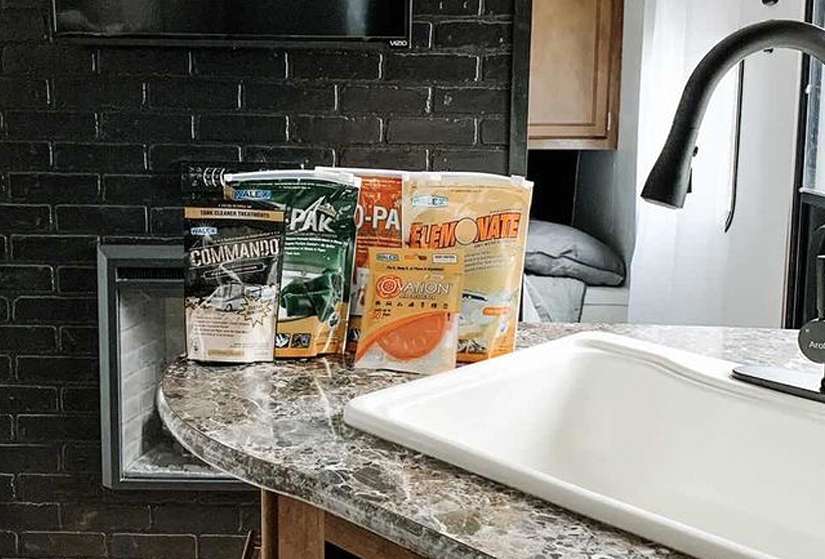
RV-ers Test & Review Walex Products
We love when RV-ers call or email us with honest feedback after using our products. We get a lot of positive reviews, which is great, but we also value constructive criticism because it helps us improve existing products or introduce new products to the market. Here's a fantastic, detailed review we recently received. If you're currently using Walex products, tell us what you think! Call 910-371-2242 or email RV sales manager Tony Butler.
Charles uses Porta-Pak, Bio-Pak and Elemonate. Here's his experience with the products so far:
Hi Tony, I wanted to follow up with you on our winter and spring camping experiences with Walex products in our two RVs.
Our continued winter experience with bio-pac in our holding tank for our travel trailer was excellent, no smells and good breakdown. I was concerned that the cold temps would inhibit essential bacteria growth and hinder breakdown, but all was well!
In our small off-road pop-up camper’s cassette toilet, the porta-pac kept smells very manageable, but I do think that the bio-pacs do a better job in the cassette toilet as well for odor management. I was concerned that the small cassette tank would not afford enough time for the essential bacteria to work, but bio-pac seems to have performed well at breakdown and superior in odor management.
Now that the temps are warming up, I will keep tabs on changes in performance characteristics. Our small off-road camper turns in a hot box in the summer when we close it up for the day to go hiking, etc. I will be curious to see if we need to switch to porta-pac for that one. Of course, I will follow up with you on that.
The elemonate did remove the tendency for grease to buildup on our dump valve, which is a huge plus. I noticed that change on first application. However, the sensor in that tank still wants to stick and I have no idea if that is a sensor issue, or a grease / containments issue. Do you think two tablets would be better, or maybe a time in tank issue? We typically have to dump the galley gray every other day. I do use elemonate every dump cycle.
I hope my info and feedback helps and my goal of giving you all a year of real world feedback will conclude at the end at the summer. It has been a fun side camping project for me and we all gain in the end. I will let you know how things go over the summer we wrap it up and see what we learned!