
RV
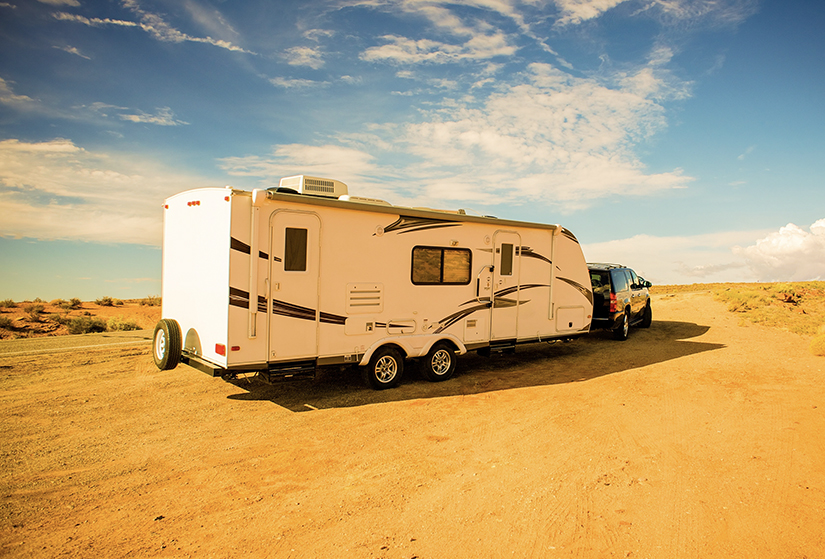
Why Does My Black Tank Smell So Bad During the Summer?
Understanding and Preventing RV Black Tank Odor Issues in Hot Weather
If you’ve spent any time RVing in hot weather, you may have encountered a strong and persistent smell coming from your black tank. You're not alone. Summer RV odor issues are incredibly common due to the heat’s impact on waste breakdown and bacterial growth in RV holding tanks. As RV tank temperatures rise, so does the intensity of the odors. The confined space inside an RV only makes it more noticeable. Whether you're camping in the desert or parked at a sunny campsite, understanding the heat effects on RV tanks is essential for a more pleasant experience.
What Causes Black Tank Smells When It's Hot?
Black tank smells during summer are often due to the accelerated decomposition of waste at high temperatures. When heat builds up inside your RV’s waste system, it intensifies odor production and exacerbates RV waste system challenges. Odors are caused by anaerobic bacteria, which thrive in high temperatures. The warm environment acts like an incubator, speeding up bacterial activity and producing noxious gases like ammonia and hydrogen sulfide.
Managing RV Tank Smells: Products and Practices
The best strategy for managing RV tank smells in the heat involves regular maintenance and the right sanitation products. Porta-Pak is the industry's gold standard for combatting summer odors. Walex's team of R&D scientists originally created the Porta-Pak formula to control odors inside portable restrooms and later adapted it for the less-demanding RV environment. Still, it remains in a class of its own when it comes to odor control, with the ability to provide immediate and long-lasting freshness.
Water: A Key Ingredient in Preventing Black Tank Odors in Hot Weather
Preventing black tank odors begins with routine RV holding tank care. Always start with a clean tank—after dumping, add 1.25 gallons of water for every 10 gallons of tank capacity before dropping in a deodorizer. This helps submerge waste and prevent the “poo pyramid” from forming above the waterline. Adding inadequate water is one of the most common causes of black tank odors.
Hot Weather RV Maintenance Tips
In addition to using the best RV black tank treatments and adequate water, hot weather RV maintenance also includes keeping your RV cool and shaded when possible. Store your RV with windows cracked open for ventilation and park with your black tank side away from direct sun exposure. Use vent fans or an odor-neutralizing product inside the RV, like Walex’s Assure, to control smells at their source. Clean your tank regularly with Commando, an enzyme-based black tank cleaner that eliminates lingering odors and restores malfunctioning sensors. These are all essential summer RV sanitation tips to enhance your overall experience.
Stay Ahead of Summer RV Plumbing Problems
With proper knowledge and the right tools, preventing RV tank issues in the summer becomes manageable. From using black tank treatments that excel at odor control to understanding RV holding tank cleaning routines, these odor control in hot climates tips can save your trip. Always travel with proven solutions and make odor control in RVs part of your regular summer RV care checklist. Don’t let black tank smells ruin your adventure—equip yourself with effective, trusted products and enjoy the open road without the stink.

Why Does My RV Still Smell? Common Odor Sources and Solutions
Why Does My RV Still Smell? Common Odor Sources and Solutions
Quick Answer: If odors linger in your RV even after using a black tank deodorizer, the source may be your grey tank, interior air, or hardened black tank buildup. Targeted treatments for each odor source provide complete odor control.
Odor Source #1: Grey Holding Tank
Many RV owners focus only on the black tank, but the grey tank can also produce strong odors. Grey tanks collect water from sinks and showers, which contains:
- Grease and cooking residue
- Soap scum
- Food particles
- Organic sludge
Over time, this buildup can generate unpleasant smells.
Solution: Grey Tank Enzyme Treatment
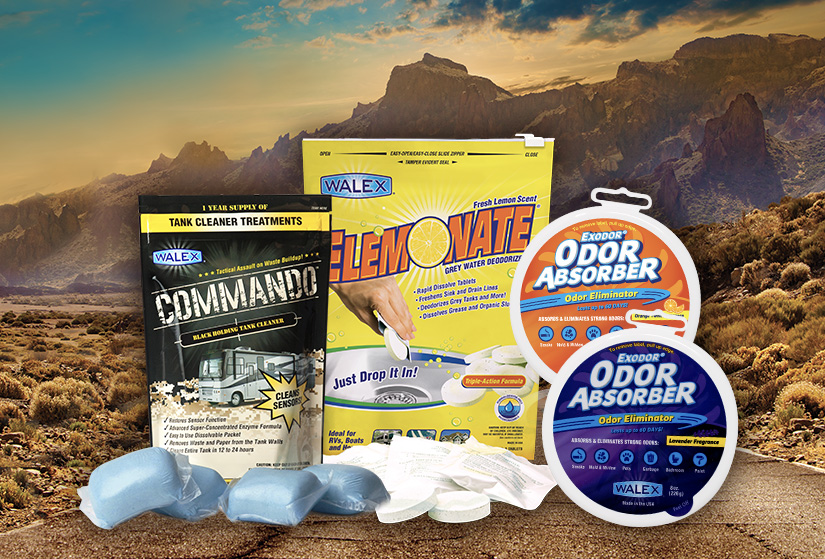
Elemonate is designed specifically for grey holding tanks. The quick-dissolving tablet contains enzymes that break down grease and sludge while releasing a fresh lemon scent.
To use:
- Drop one tablet into the sink drain.
- Run water for several seconds to dissolve.
- Allow enzymes to work inside the tank.
Odor Source #2: Interior Air (Mildew, Trash, Laundry)
RVs are compact spaces, which means odors from garbage, damp towels, or pets can quickly become noticeable.
Solution: Air Odor Neutralizer
Odor Absorber is a charcoal-infused gel that traps and neutralizes airborne odor molecules. Once opened, it works continuously for up to 60 days.
Common placement areas include:
- Under the sink
- Inside trash bins
- Near laundry storage
- In storage compartments
Odor Source #3: Black Tank Buildup (“Pyramid Plug”)
If black tank odors persist even when using deodorizer, hardened waste buildup may be the problem. This often happens when insufficient water is used, allowing solids to accumulate and cake onto tank walls and sensors.
This buildup can:
- Trap residual odor
- Cause false sensor readings
- Restrict proper tank flow
Solution: Deep Black Tank Cleaning
Commando is a concentrated enzyme cleaner designed to break down hardened solids and restore tank performance.
To use:
- Empty and rinse the tank.
- Add one packet and fill the tank with water.
- Let sit for 12–24 hours (longer if needed).
- Dump and rinse again.
The enzyme formula works without scrubbing to clean tank walls and sensors.
Complete RV Odor Control Strategy
- Treat black tank regularly
- Maintain grey tank with enzyme tablets
- Use adequate water after dumping
- Neutralize interior air odors
- Deep clean periodically
Bottom Line
If your RV still smells, the issue may not be your black tank deodorizer—it may be another overlooked odor source. Targeting each source individually ensures a fresher, more comfortable travel experience.
Need Help? Call 800-338-3155 or visit your local RV dealer for product guidance.
How do I get rid of the black tank pyramid?
A black tank pyramid refers to the buildup of waste and paper in your RV's black holding tank, and it can put a significant damper on your RV travels. Waste buildup fills your RV with foul odors and is a pain to remove—without the right products. Here's how you can prevent a pyramid from forming or eliminate one if it does.
Don't leave your black tank valve open when you're hooked up at a site.
If you allow your tank to drain gradually, the liquids will pass through while the solids build up in a solid pyramid. To thoroughly dump the contents of your tank, you need the assistance of gravity. Keep the valve closed until the tank is 2/3 full, and then dump it.
Use an enzyme-based deodorizer.
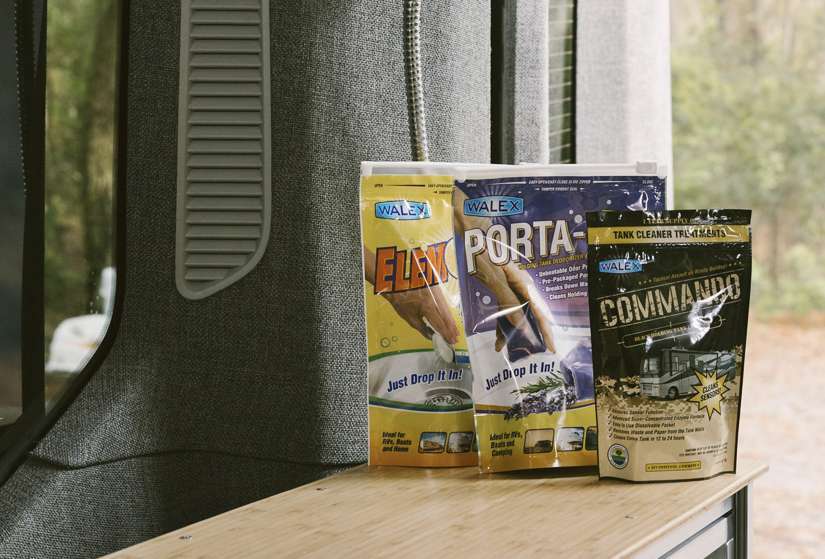
Enzymes digest waste and paper, so using a deodorizer with powerful enzymes will keep the contents of your black tank from solidifying. Walex's Bio-Pak is an enzyme-based formula contained in a rapid-dissolving water-soluble packet. When flushed down into the tank, the enzymes go to work immediately, breaking down buildup and deodorizing in the process.
Use an enzyme-based black tank cleaner.
If you suspect a waste pyramid has formed in your black holding tank, you need to use Commando. Commando's innovative formula is packed with enough enzymes to restore your black holding tank to good-as-new, no scrubbing or agitation required. Not only will it liquefy the waste and paper, but it will clean tank walls and sensors, restoring the accuracy of your sensors. Here's how to use it:
- Empty your tank, rinse out any chemical residue, close your dump valve, drop one Commando packet into the toilet, and flush
- Then fill your holding above your highest sensor or completely full.
- Leave it in for a minimum of 12 hours. Commando is formulated to work in as little as 12 to 24 hours for those in a hurry, but it will not hurt your tank to leave it in longer, several days, for more stubborn holding tank issues or clogs.
- Empty your tank. Rinse again. You can now add your deodorizer, refill with 1.25 gallons of water for every 10 gallons of holding tank capacity and continue using the toilet.
You can use Commando to destroy existing buildup or preventatively every three months to control buildup from forming.
Happy adventuring!


Can You Use RV Grey Tank Deodorizer in Your Home Drains?
Can You Use RV Grey Tank Deodorizer in Your Home Drains?
Quick Answer: Yes. An enzyme-based grey tank deodorizer designed for RV use can also help freshen home sinks, shower drains, and garbage disposals by breaking down grease and organic buildup.
What Is a Grey Tank Deodorizer?
A grey tank deodorizer is formulated for the RV tank that collects water from sinks and showers. These tanks accumulate soap residue, grease, food particles, and organic sludge—all of which can produce unpleasant odors over time.
Elemonate is a quick-dissolving tablet that releases digestive enzymes to break down odor-causing buildup while leaving behind a fresh lemon scent.
Can You Use Grey Tank Tablets in Household Drains?
Yes. The same types of organic residue that cause odors in RV grey tanks—grease, food scraps, and greywater buildup—can also accumulate in home plumbing systems.
Using an enzyme-based deodorizing tablet in your kitchen sink, bathroom drain, or garbage disposal can help neutralize these odors.
How to Use an Enzyme Deodorizer in Home Sinks
- Drop one tablet directly into the sink or disposal.
- Run water for several seconds to help dissolve it.
- Allow the enzymes to coat the drain lines.
The enzymes begin breaking down organic buildup while freshening the drain.
Is It Safe for Plumbing and Septic Systems?
Enzyme-based drain treatments are generally safe for pipes because they do not rely on harsh corrosive ingredients. They work by accelerating natural digestion rather than chemically stripping residue.
Because the formula uses natural enzymes, it is also compatible with septic systems and will not disrupt beneficial bacteria.
When Should You Use a Drain Deodorizer?
- If your sink emits a foul odor
- After cooking greasy meals
- If your garbage disposal smells
- As preventative maintenance for drains
Bottom Line
An enzyme-based grey tank deodorizer isn’t just useful in your RV—it can also help maintain fresher-smelling home drains. By targeting grease and organic sludge at the source, it provides safe and effective odor control.
Happy Adventuring!
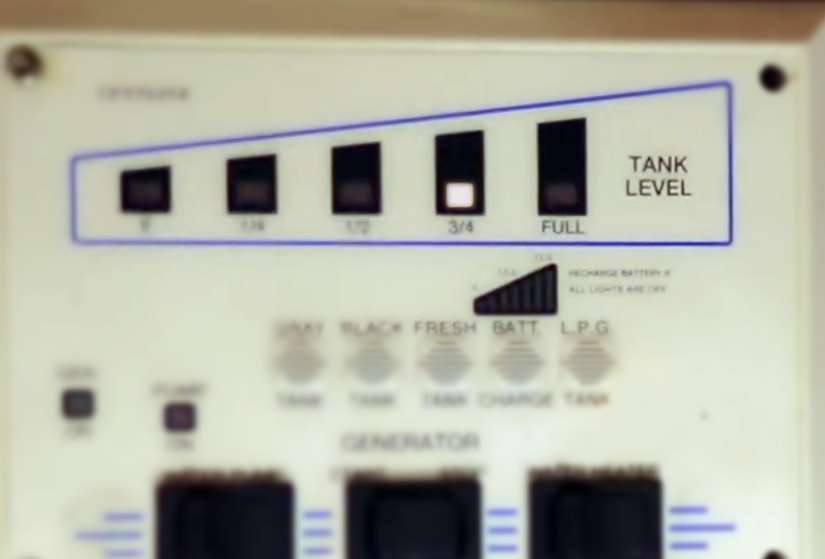
Black tank sensors reading 2/3 full? Here's the solution.
How to Fix RV Black Tank Sensors That Read Incorrectly
Problem: RV black tank sensors often show false readings—usually stuck at 2/3 full—even after dumping.
Quick Answer: Sensor misreadings are typically caused by waste and toilet paper residue stuck to tank walls. Cleaning the tank with an enzyme treatment like Commando can restore accurate readings in as little as 12–24 hours without scrubbing or agitation.
Why Are My RV Black Tank Sensors Showing the Wrong Level?
False readings happen when residue builds up on tank walls and sensor probes. This buildup tricks sensors into detecting liquid levels that aren’t actually there. Even after dumping, debris stuck to the sensors can make them appear partially full.
When sensors are inaccurate, RV owners often dump more frequently than necessary, which can lead to poor waste breakdown and the formation of hardened waste buildup commonly called a “pyramid plug.”
How Do You Clean RV Tank Sensors?
The easiest way to clean black tank sensors is by using a drop-in enzymatic cleaner designed to break down residue inside the tank.
Step-by-Step Sensor Cleaning Method
- Empty the holding tank completely and rinse to remove leftover chemicals.
- Close the dump valve, drop one Commando packet into the toilet, and flush.
- Fill the tank above the highest sensor (or completely full).
- Let it sit for at least 12 hours. For tougher buildup, leaving it longer can improve results.
- Dump and rinse again. Then add deodorizer and refill with about 1.25 gallons of water per 10 gallons of tank capacity.
How Does an Enzyme Tank Cleaner Work?
Enzyme-based treatments release natural digesting agents that break down waste, paper, and residue inside the tank. As buildup dissolves, sensors become exposed again and can read liquid levels accurately.
How Often Should You Clean RV Tank Sensors?
For preventative maintenance, clean your tank every three months. Regular treatment helps keep tank walls clear, lubricates valves and seals, and reduces the chance of clogs or inaccurate readings.
Many RV owners also include a deep tank cleaning as part of their winterizing routine to prevent buildup during storage.
When Should You Use a Tank Cleaning Treatment?
- Sensors always show partially full
- Readings fluctuate randomly
- Tank was stored without cleaning
- Dumping frequency has increased unexpectedly
- You suspect residue or buildup inside the tank
Pro Tip: If your sensors are inaccurate, cleaning the tank is almost always more effective than replacing the sensors themselves.

How Much Deodorizer Should You Use in a 2.5- or 5-Gallon Porta-Potty?
How Much Deodorizer Should You Use in a 2.5- or 5-Gallon Porta-Potty?
Quick Answer: For cassette toilets or portable potties (2.5–5 gallons), use one full drop-in deodorizer packet per tank. Add the correct amount of water to ensure proper dissolution and effective odor control.
Can You Use RV Tank Deodorizer in a Cassette Toilet?
Yes. Even though many deodorizers are designed for larger black holding tanks, they can also be used in smaller systems like cassette toilets and portable potties commonly found in van conversions and camper vans.
Products such as Porta-Pak come in water-soluble packets, which means there is no need to open or measure the product. Simply drop the entire packet into the tank.
How Many Packets Should You Use?
Always use one full packet. Do not cut or open the packet. The water-soluble casing is designed to dissolve completely once added to the tank.
How Much Water Should You Add?
Water is essential for proper deodorizer performance. It helps dissolve the packet and ensures waste stays below the waterline so the treatment can work effectively.
- 5-gallon tank: Add ¾ to 1 gallon of water
- 2.5-gallon tank: Add approximately ½ gallon of water
The deodorizer can only treat the waste it contacts, so adequate water is critical for odor control and breakdown.
Does Deodorizer Help Break Down Waste?
In addition to controlling odors, many drop-in treatments help break down waste and toilet paper, making the tank easier to empty and clean.
Best Practices for VanLife and Portable Toilets
- Always add water before use
- Use one full packet per tank
- Empty when near capacity for better flow
- Rinse thoroughly after dumping
Need Help? Call 910-371-2242 with any questions about proper product usage.
Happy Adventuring!

Does Your RV Black Tank Need a Deep Clean?
Does Your RV Black Tank Need a Deep Clean?
Quick Answer: If you notice persistent odors, false sensor readings, or signs of hardened waste buildup (often called a “pyramid plug”), your black holding tank likely needs a deep enzymatic cleaning.
What Causes Black Tank Odors and Sensor Problems?
Even when using a regular deodorizer, waste and toilet paper can gradually accumulate on tank walls and sensor probes. Over time, this residue can:
- Create lingering odors
- Cause inaccurate tank level readings
- Lead to hardened “pyramid” buildup
- Interfere with valve performance
If your sensors always read partially full or your toilet doesn’t smell as fresh as it used to, buildup is often the cause.
What Is a “Pyramid Plug” in an RV Tank?
A pyramid plug forms when solid waste accumulates and hardens inside the tank, often due to insufficient water use or dumping too frequently. This buildup can restrict flow and contribute to persistent odor problems.
How to Deep Clean Your RV Black Tank
To remove residual waste and restore sensor accuracy, use a concentrated enzyme tank cleaner such as Commando.
Step-by-Step Deep Cleaning Method
- Empty and rinse the black tank thoroughly.
- Drop one pre-measured packet into the toilet.
- Fill the tank above sensor level with water.
- Allow the solution to sit for 12–24 hours (longer if buildup is stubborn).
- Dump and rinse again.
The enzyme formula works by breaking down waste and paper, loosening residue from tank walls, cleaning sensors, and helping lubricate valves and seals.
When Should You Deep Clean Your Black Tank?
- Before winterizing your RV
- After extended summer travel
- If sensors are giving false readings
- If odors persist after dumping
- As preventative maintenance every 3 months
Why Preventative Maintenance Matters
Routine deep cleaning helps prevent buildup before it becomes a major issue. Keeping tank walls clean improves odor control, ensures accurate sensor readings, and reduces the likelihood of clogs during peak travel season.
Bottom Line: If your RV black tank isn’t performing like it used to, a deep enzymatic cleaning can restore function and eliminate stubborn odors—no scrubbing required.
Happy Adventuring!
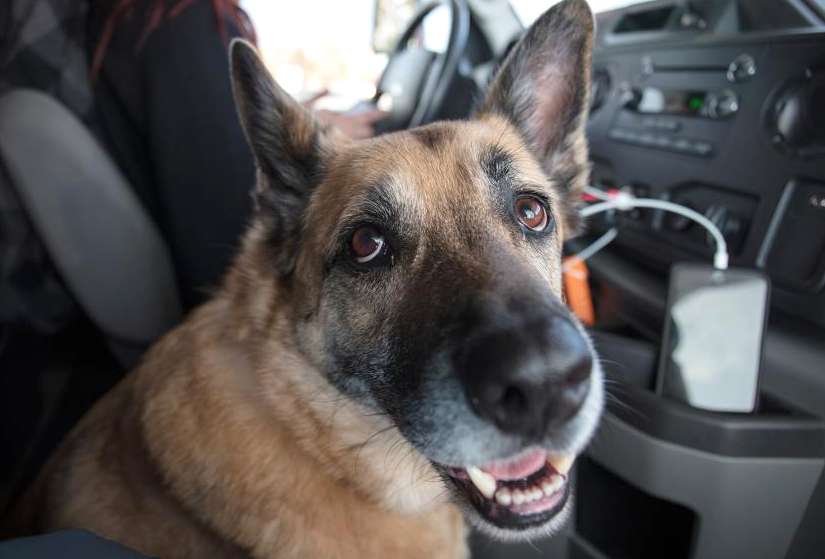
Traveling in an RV with pets? Here are two products that will make your trip more comfortable.
Get rid of smells from pets, mildew and garbage with Walex's odor eliminators
In the past year, many people have discovered the excitement and freedom of traveling by RV. If you are one of those new RV owners and have pets that you want to take on your travels, don’t worry! Plenty of RVers travel with dogs of all sizes, cats, and even bunnies.
Many people know what items to bring to ensure that their pet is comfortable on the road. But it would be best if you also considered your comfort when living in tight quarters with animals, and that means eradicating the occasional furball, dirty pawprint, and odor. Walex is the expert in odor control, and we have two products that animal owners always recommend!
Odor Absorber
Packing at least one Walex Odor Absorber in your RV is an easy decision. It is a gel-infused charcoal product that destroys odor molecules rather than masking them with fragrance. It is easy to use; simply peel back the top, and it goes to work instantly, neutralizing odors in the air and creating a bright, fresh-smelling space. One Odor Absorber can freshen a 300 square foot space for as long as 60 days, so you can leave it in your RV between trips to avoid those stale storage smells. Odor Absorber is non-toxic, biodegradable, and environmentally safe.
Assure Odor Eliminator Spray
Assure is another odor-destroying product that contains natural essential oils. We package the fresh-smelling liquid product in a spray bottle so you can quickly spritz seat cushions or rugs as needed. Assure eliminates odor molecules on contact, whether in the air or fabric. We designed it to fight the most challenging pet, trash, and bathroom odors, but it is also great for eliminating smoke, mold, and mildew. It is non-toxic, environmentally friendly, and safe for use around dogs and cats. Just a little bit of this product goes a long way in odor control.
You can find both of these products on the shelf at your local RV dealer, next to the Walex holding tank deodorizers. We hope both you and your furry friends enjoy your next RV trip! Happy Adventuring from the Walex crew.
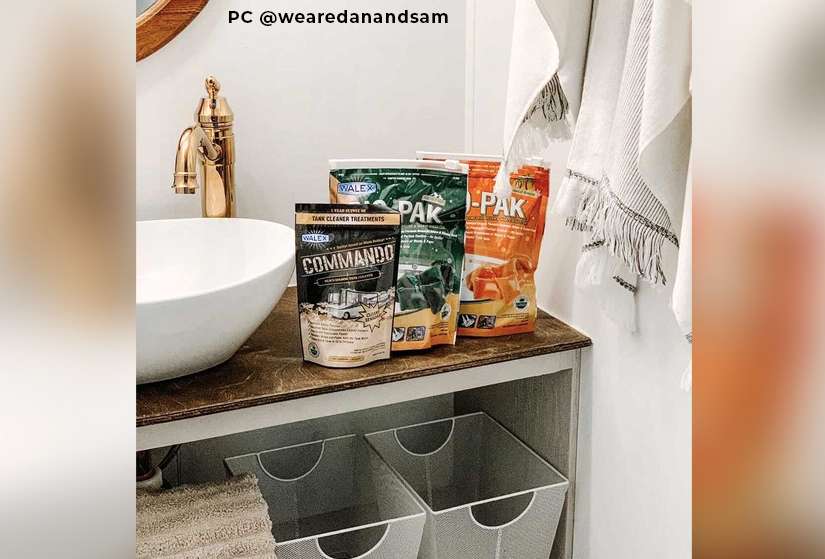
How Often Should You Add Deodorizer to Your RV Black Tank?
How Often Should You Add Deodorizer to Your RV Black Tank?
Quick Answer: Most RV owners should add one drop-in deodorizer packet every time they dump their tank—typically every 5–7 days for two people in moderate weather. Always add treatment immediately after emptying and refilling the tank.
How Long Does One Bag of RV Deodorizer Last?
Usage depends on how many people are using the RV and how frequently the tank is dumped. As a general guideline:
- Two people in moderate temperatures: 1 packet every 5–7 days
- Higher usage or warmer climates: possibly more frequent treatment
- Lower usage: slightly longer intervals
If a bag contains 10 packets, it typically lasts about 5–10 weeks depending on usage.
When Is the Best Time to Add RV Tank Deodorizer?
The ideal time to add a new packet is immediately after dumping your black tank. Waiting until the tank reaches about 2/3 full before dumping ensures strong flow, which helps remove solids more effectively.
For enzyme-based treatments like Bio-Pak, allowing the tank to reach 2/3 full gives enzymes more time to liquefy waste and paper for easier dumping.
How Much Water Should You Add After Dumping?
Water is critical for odor control and proper digestion.
Recommended starting point:
- 1.25 gallons of water per 10 gallons of tank capacity
For a 40-gallon tank, that equals about 5 gallons of water before use.
Proper water levels allow waste and paper to sink below the waterline, where treatment works most effectively. Insufficient water can lead to hardened buildup (often called a pyramid plug) and persistent odors.
Why Sensor Accuracy Affects Odor Control
Knowing when your tank is 2/3 full depends on functioning sensors. If your sensors give false readings, you may dump too early or too late, which can affect odor control and tank health.
If sensors become inaccurate, use a deep-clean treatment like Commando to remove residue from tank walls and sensor probes.
How to Restore Sensor Function
- Empty the tank.
- Add one Commando packet.
- Fill the tank above sensor level.
- Let sit for 12–24 hours (longer if needed).
- Dump and rinse.
This process helps liquefy residual buildup, lubricate valves, and restore accurate readings.
Best Practices for Odor-Free RV Travel
- Dump at 2/3 full
- Add deodorizer immediately after dumping
- Use adequate water
- Monitor sensors regularly
- Perform periodic deep cleanings
Bottom Line: Consistent treatment, proper water levels, and accurate sensors are the keys to keeping your RV toilet odor-free.
Happy Adventuring!
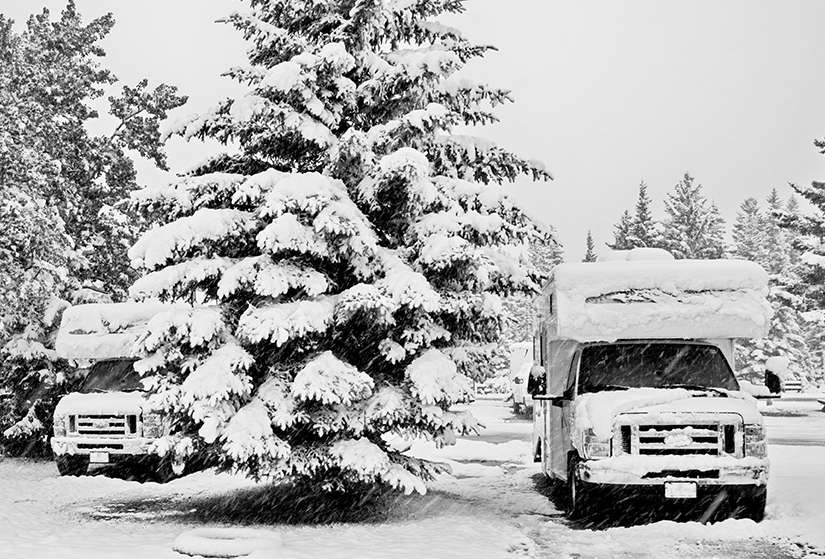
Will my RV holding tanks freeze?
How to prevent your RV holding tank and pipes from freezing
If you're spending the night in a cold climate—where the temperature will drop below 32 degrees—you might worry that your RV tanks and pipes will freeze. If you take a few precautions and understand the capabilities of your RV, you should be fine. Keep reading for helpful tips.
Keep your lines and valves warm.
The parts of your RV plumbing that are most vulnerable to freezing are the lines and valves rather than the holding tanks. In frigid temperatures, these can freeze and crack, causing costly repairs. In some RVs, the pipes are more exposed, while in other RVs, the propane furnace pumps heat around the tanks.
Drain the tanks and pipes and add RV antifreeze.
If the temperature drops down into the teens, you'll want to add RV antifreeze to the pipes to keep them from freezing and cracking. First, drain the tanks and lines to ensure nothing interferes with the action of the antifreeze. Then, dump a gallon of RV antifreeze down the sink and toilet drains.
RV antifreeze is very different from automotive antifreeze; the active ingredient is propylene glycol, which raises the freezing point of water. Propylene glycol is non-toxic. When temperatures rise, and you resume use of your holding tanks, you can also continue using holding tank deodorizers such as Bio-Pak or Porta-Pak.

Four Reasons to Use Your RV this Christmas
Christmas celebrations will look different for many of us this year, but your RV might be the key to unlocking a different but equally enjoyable holiday season. Here are four reasons to use your RV this Christmas.
You can safely visit extended family.
Maybe Uncle Eddie had the right idea after all when he parked his RV in Clark Griswold’s driveway for the holidays. What was normal during past Christmases—extended family near and far congregating to spend the holidays under one roof—is not considered safe during the ongoing pandemic.
While you might not be able to stay in the guest bedroom down the hall from your aging parents or pregnant daughter, you can temporarily—ahem, Uncle Eddie—park your RV in a family member’s driveway and visit with them outdoors. Weather permitting, an early Christmas dinner on the back deck would be a great way to safely enjoy each other’s company and celebrate the season.
You can take your pets.
While pet ownership brings many joys, it does complicate travel. If you’re traveling in your RV, though, you don’t have to worry if your toy poodle will get along with your aunt’s American bulldog or if you should just fork up the money for a pet sitter. When you travel by RV, though, you can bring your pup along for the ride every time. Just stock up on some Walex Odor Absorbers to eradicate any “dog” smells you might start to notice over time. Our gel-infused odor absorber uses a layer of charcoal to absorb odors without any artificial fragrances.
You can spend the holidays in warmer weather.
Owning an RV gives you the freedom to go where you want when you want. If a white Christmas doesn’t sound appealing this year, pack up the RV and head south for the holidays. Camping World has some great destination suggestions.
You can still enjoy your favorite Christmas traditions.
If you’re planning to spend your Christmas Eve in an RV campsite, you might be worried that you’ll miss all the traditions you typically enjoy at home. But you can adapt those traditions to RV life.
Here are some excellent ways to display a Christmas tree inside your RV. You can also string lights around your RV's perimeter—icicle lights look beautiful on the awning—but just make sure the decorations don’t consume too much wattage. Choose LED lights, which use less power than regular lights. Or, rather than using lights that you have to string up every time you change location, you can set up a Christmas light projector to colorfully illuminate your RV's exterior.
You can even replicate Christmas dinner! If feasting on turkey and stuffing is a Christmas Day tradition, you can cook a few juicy turkey breasts on your charcoal grill and prepare the stuffing in your crockpot. When it’s time to clean up after the meal, Walex has you covered with our powerful all-purpose cleaner and easy-to-use odor eliminating spray.
No matter how you decide to use your RV this Christmas, we wish you safe, happy travels. And don’t forget, wherever the road takes you, take Walex.

Can I Use a Black Tank Cleaner in my Grey Holding Tank Too?
Can You Use a Black Tank Cleaner in an RV Grey Tank?
Quick Answer: Some RV owners use black tank cleaners in their grey tanks to help clean sensors, but these products are not specifically formulated for grey water buildup. For grease, food particles, and organic sludge in grey tanks, a dedicated grey tank treatment is recommended.
Is It Safe to Use Black Tank Cleaner in a Grey Tank?
Black tank cleaners are formulated primarily to break down waste and toilet paper. While they were not specifically designed for grey water systems, some RV owners report success using them to address sensor buildup inside grey tanks.
If used for this purpose, allow the solution to remain in the tank for at least 12–24 hours, or longer if needed, to help break down residue.
How Do You Apply a Black Tank Cleaner to a Grey Tank?
- Dissolve one packet in a plastic cup using room-temperature tap water.
- Stir gently until fully dissolved.
- Pour the solution down a sink drain connected to the grey tank.
- Fill the grey tank to near full capacity for best coverage.
- Allow 12–24 hours of soak time before dumping.
A fuller tank allows the treatment to contact sensors and tank walls more effectively.
What Causes Grey Tank Odors and Buildup?
- Grease from dishwashing
- Food particles
- Soap residue
- Organic sludge
- Buildup on tank walls and sensors
Unlike black tanks, grey tanks accumulate fats, oils, and soaps that require targeted formulas for optimal breakdown.
What Is the Best Treatment for RV Grey Tanks?
For regular grey tank sanitation and odor control, use a product specifically formulated for grey water systems. Elemonate is designed to break down grease, food particles, and organic sludge while freshening the tank.
Using a treatment formulated for grey tanks ensures more effective buildup removal and odor management.
When Should You Deep Clean a Grey Tank?
- Sensors are reading inaccurately
- Persistent odors are present
- Drainage seems slow
- Tank hasn’t been cleaned in months
Need Guidance? Call 800-338-3155 for expert advice on choosing the right treatment for your RV holding tanks.